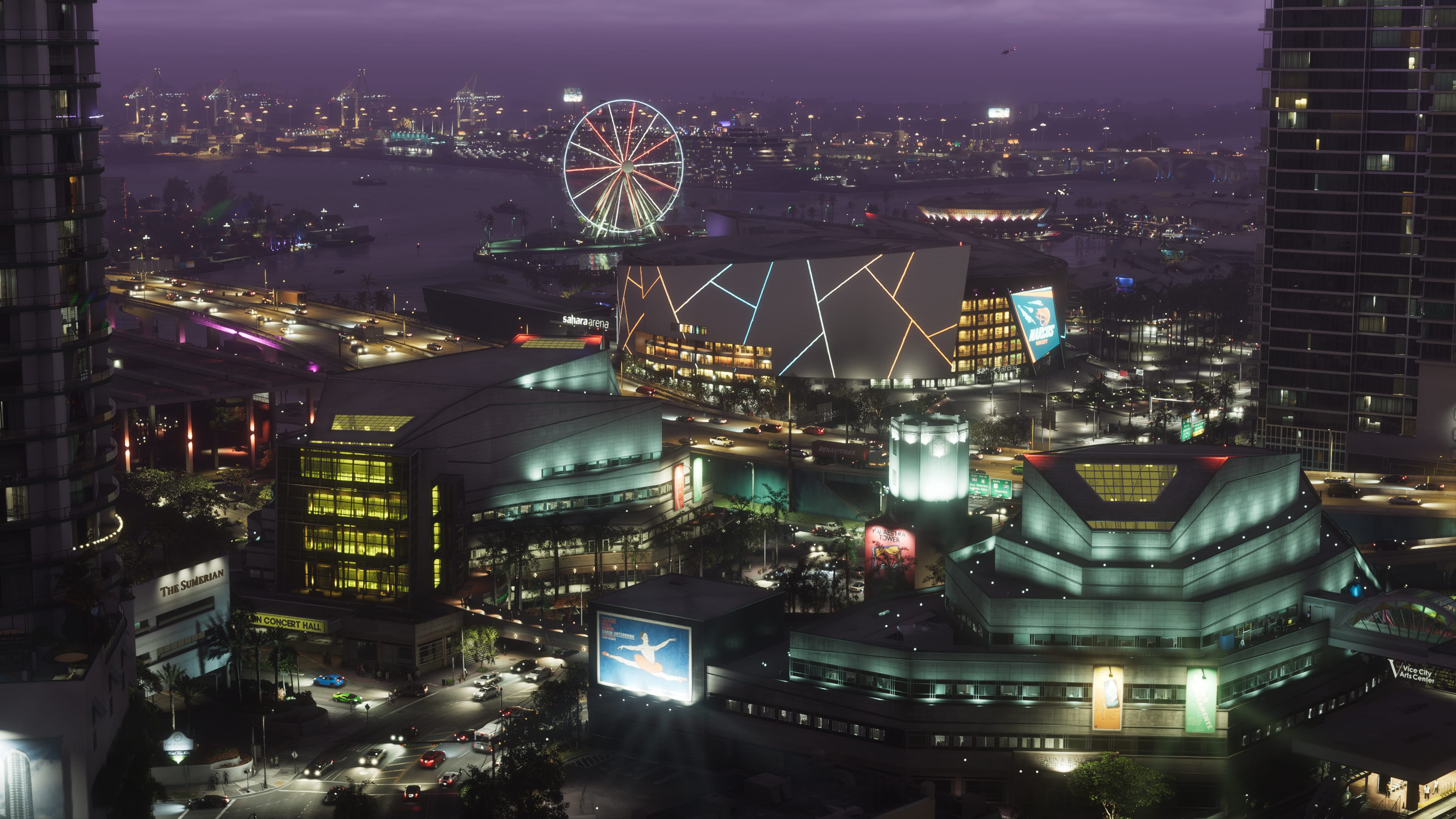
Quick Answer: GTA 6’s headlines are a 2.5× map and photoreal lighting, but the thing most likely to define how the game feels — the quality that separates a world you admire from a world you live in — is its people. After Red Dead Redemption 2 set a new NPC benchmark, GTA 6 is positioned to make its crowds, drivers, and bystanders the real generational leap: the first Rockstar world dense and reactive enough to feel genuinely inhabited.
The Thing You Can’t See in a Screenshot
Open-world marketing lives and dies by screenshots — vistas, sunsets, car crashes frozen mid-spark. Those sell pre-orders, and GTA 6’s are staggering. But screenshots can’t capture the quality that actually determines whether a game world holds up over 50, 100, 200 hours: how its inhabitants behave when you’re not shooting at them.
Graphics age. A 2013 screenshot looks dated in 2026. But a world where every pedestrian has a routine, where strangers hold conversations you can overhear, where traffic flows like traffic and reacts to your driving — that fabric of simulation doesn’t age the same way. It’s the difference between a diorama and a place. And it’s the area where GTA 6 has the most room to leap.
The Benchmark: What RDR2 Already Achieved
To calibrate expectations, look at what Rockstar managed in 2018. Red Dead Redemption 2’s NPCs were widely regarded as the best in any open world to date — not because they were individually brilliant, but because of the systemic density around them:
- Camp members had routines. They ate, slept, argued, played cards, and commented on your actions and appearance. They remembered if you’d been generous or cruel.
- Strangers had lives. People in towns held conversations, reacted to a drawn weapon, fled from danger, and responded to your demeanor.
- The world noticed you. Mud on your clothes, a recent crime, your horse’s condition — NPCs and systems reacted to your state.
That was on PS4 and Xbox One. GTA 6, built for current-gen hardware, inherits that foundation and has far more CPU headroom to build on it. The benchmark isn’t “will NPCs be good” — it’s “how much further can Rockstar push the simulation now that the old consoles’ limits are gone.”
What the Trailers Suggest
Trailer footage isn’t final behavior, but it’s a deliberate signal of ambition, and what Rockstar chose to show is telling:
- Denser crowds. Beaches, clubs, and streets are packed with distinct individuals rather than the copy-pasted handfuls of older GTAs.
- Individualized reactions. Pedestrians respond to the player and to each other in ways that imply systemic, not scripted, behavior.
- A modern, connected world. The in-world presence of smartphones and social media (TikTok-style clips, in-game streaming) suggests NPCs exist in a media ecosystem — recorded, watched, performing for each other. That’s a genuinely new layer of simulation no prior GTA attempted.
The last point matters more than it might seem. A city where NPCs film you, where clips circulate, where your notoriety has a social-media dimension is a fundamentally different kind of world — one where the inhabitants aren’t just scenery but participants in the same information economy the player inhabits.
The Patent Trail
A quieter signal of where Rockstar has invested technically: the studio and its parent Take-Two have filed patents describing systems for NPC navigation and traffic behavior designed to make movement feel organic rather than robotic. The goal such systems pursue is well established in game AI — steering NPCs along paths that adapt to context (other characters, obstacles, the player) so that crowds don’t shuffle along fixed rails and traffic doesn’t follow obvious loops.
Patents aren’t products, and a filing doesn’t prove a feature ships. But they’re a reliable indicator of where a company spends R&D, and Rockstar’s filings cluster exactly around the simulation problems a dense modern city raises. Combined with the trailer evidence, they paint a consistent picture: the studio has been tooling up specifically to populate a world this ambitious.
Why NPC AI Is the Hardest Problem at This Scale
Here’s the paradox at the heart of an enormous map: a bigger world is harder to make feel alive, not easier. GTA 5’s large empty stretches of desert and highway are the cautionary tale — scale without substance produces dead air between objectives.
NPCs are the cure, and the reason they’re so important to GTA 6 specifically:
- They turn travel into content. In a 2.5× map, you spend more time moving than ever. If traversal is empty, the game feels padded. If the world pushes back — traffic that behaves, pedestrians who react, incidents that emerge — every drive becomes a story.
- They make density readable. A crowd of identical NPCs reads as a backdrop. A crowd of individuals, each doing something, reads as a city. The same headcount feels alive or dead depending entirely on the AI behind it.
- They sustain the long-term loop. The reason players log thousands of hours into Rockstar worlds isn’t the story — it’s the emergent encounters. More reactive NPCs mean more of those, indefinitely.
This is why NPC AI, more than any single graphical feature, determines whether Leonida is a place you visit once or a place you live in for years.
The Real Test: Does the World Push Back?
The promise of next-generation NPCs isn’t that they look better. It’s that the world becomes a protagonist — unpredictable, reactive, occasionally hostile, always surprising. The moments players remember from Rockstar games are almost never scripted set-pieces; they’re the emergent ones: a stranger’s errand that went sideways, a pursuit that a random traffic jam decided, a campfire conversation that landed unexpectedly.
If GTA 6’s systems are deep enough, those moments multiply. Weather changes how NPCs behave. Your wanted level changes how the city treats you. Time of day changes who’s on the street. Reputation, appearance, even the car you drive ripple through the simulation. None of that is visible in a screenshot, and all of it is what makes a world feel real.
Honest Caveats
A few cautions before declaring NPC AI solved:
- Trailers are curated. Footage is staged to look impressive; final in-game behavior may be less consistent, especially across a map this large.
- Ambition outruns hardware. Even current-gen consoles have finite CPU. Denser crowds and deeper AI compete for the same resources that drive frame rate, which is part of the recurring 30-vs-60-fps debate.
- Edge cases multiply. More systemic simulation means more ways for things to break. Rockstar games ship complex, and GTA 6 will need strong post-launch support.
- Density can backfire. A world that never stops reacting can feel exhausting or buggy if the reactions are shallow. Quality of behavior matters more than quantity.
The Bottom Line
Graphics sell a game on a poster; NPCs sell it over hundreds of hours. GTA 6 is positioned to make its biggest leap in the place players will feel most: not in how Leonida looks, but in how it responds. If Rockstar delivers on the density and reactivity the trailers and its own R&D suggest, the result won’t just be the prettiest GTA — it’ll be the first open world whose inhabitants make you forget you’re inside a simulation at all. And that, more than any headline number, is what players will still be talking about a decade from now.
For the systems that make a reactive world worth exploring, see our features on building interiors, the wanted system, and the RAGE 9 engine that powers it all.