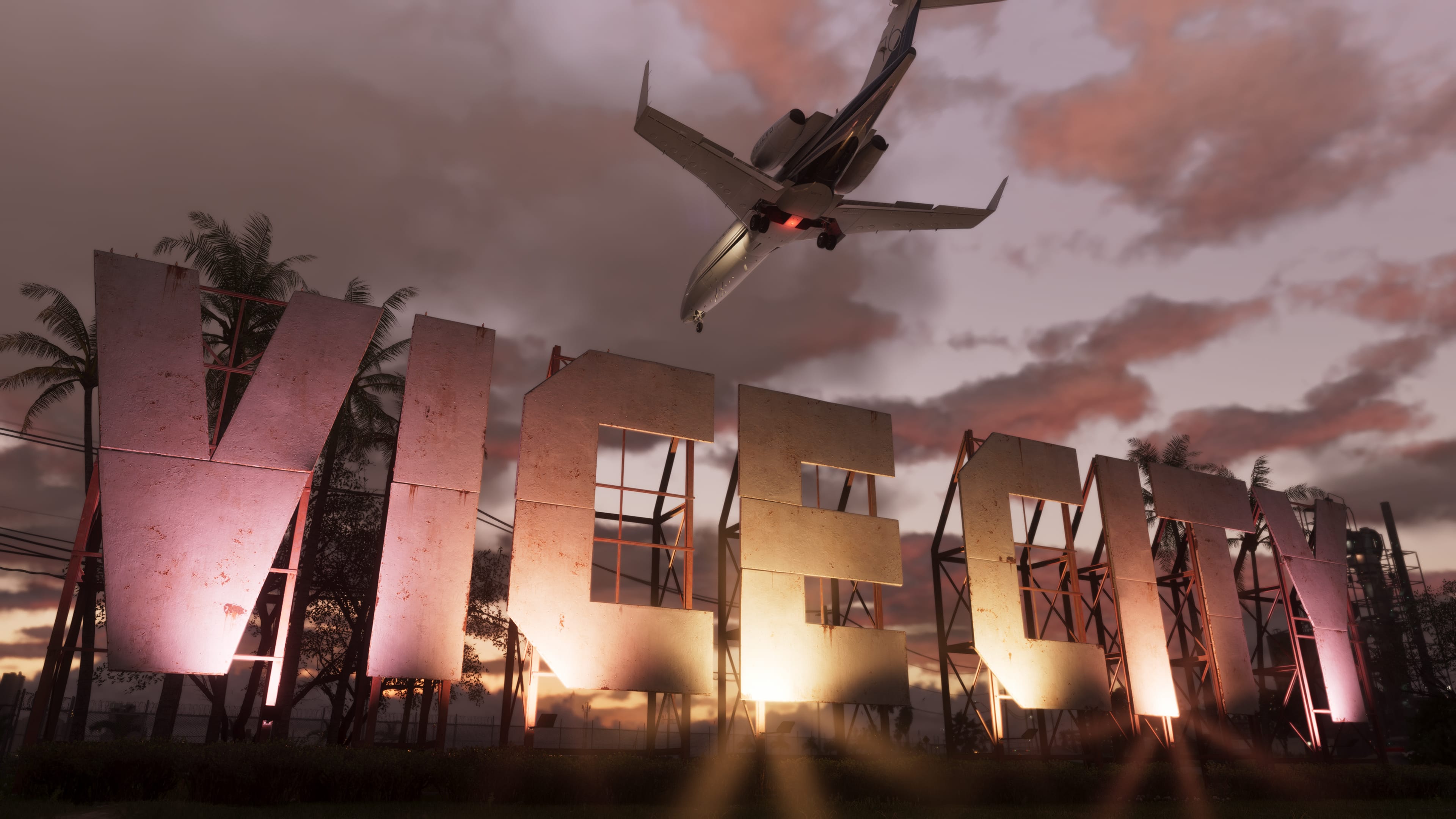
Quick Answer: Without Rockstar’s 2006 oddity Rockstar Games Presents Table Tennis, Grand Theft Auto 6 as we know it would not exist. That seemingly trivial ping-pong simulator was the debut of Rockstar’s proprietary RAGE engine, which later powered every major Rockstar title from GTA IV to Red Dead Redemption 2. GTA 6 runs on RAGE 9, the direct descendant of that 2006 technology.
It sounds like a bar trivia punchline: without a ping-pong game, there’d be no GTA 6. Yet according to Polygon’s deep dive into Rockstar’s history, the company’s 2006 Xbox 360 launch title Rockstar Games Presents Table Tennis was far more than a quirky sports sim. It was the proving ground for the Rockstar Advanced Game Engine (RAGE), a custom-built engine that would define the company’s next two decades — and eventually power the most anticipated game of the 2020s.
Origin Story: Rockstar’s Ping-Pong Experiment
In 2005, Rockstar was riding high on Grand Theft Auto: San Andreas but facing a technological crossroads. The aging RenderWare engine that had served the GTA III era was no longer cutting-edge. Meanwhile, Sony and Microsoft were launching new consoles — the PlayStation 3 and Xbox 360 — that demanded a graphics and physics leap.
According to the Polygon report, Rockstar quietly assembled a small team within its San Diego studio to build an engine from scratch. To test it without risking a flagship franchise, they chose a low-stakes project: a realistic table tennis simulation. The result was Rockstar Games Presents Table Tennis (2006), which featured hyper-realistic ball physics, fluid player animations, and a clean 60 frames-per-second presentation — all innovations that would later become Rockstar hallmarks.
The game was a critical success and a commercial cult hit, but its real importance was internal. It validated the RAGE engine’s core architecture, allowing Rockstar to scale it for open-world masterpieces.
The Birth of RAGE: A Technical Breakdown
RAGE wasn’t just a graphics engine; it was a full suite of tools for physics, animation, AI, streaming, and rendering. Table Tennis tested the engine’s physics and animation systems at a micro level. The ball’s spin, the paddle’s collision, and the player’s reactive movement all required precise simulation. That same foundation would later handle car chases, horse gallops, and plane crashes.
| Game | Engine Version | Year | Key Innovations from Prior Version |
|---|---|---|---|
| Rockstar Table Tennis | RAGE 1.0 | 2006 | Debut: physics, animation rigging |
| GTA IV | RAGE 2.0 | 2008 | Open-world streaming, Euphoria NPC physics |
| Red Dead Redemption | RAGE 2.5 | 2010 | Large terrain streaming, dynamic weather |
| Max Payne 3 | RAGE 3.0 | 2012 | Bullet time physics, advanced facial animation |
| GTA V | RAGE 4.0 | 2013 | Procedural animation, 3D audio, draw distance optimization |
| Red Dead Redemption 2 | RAGE 8.0 | 2018 | 200,000+ animations, volumetric lighting, particle system overhaul |
| GTA 6 (rumored) | RAGE 9.0 | 2026 | Real-time ray tracing, AI-driven NPC behaviour, seamless streaming |
Each major iteration borrowed lessons from the previous. The meticulous physics of Table Tennis, for instance, directly informed the car deformation physics in GTA IV and the horse movement in Red Dead Redemption.
From Table Tennis to Liberty City: The First Open-World Leap
Rockstar didn’t immediately reveal RAGE’s potential. GTA IV (2008) was the first open-world RAGE game, and it stunned players with its realistic physics, dynamic lighting, and detailed animations. The same engine that made a ping-pong ball bounce realistically now made Niko Bellic stagger after a punch and cars lurch over potholes.
The leap from a table to Liberty City wasn’t trivial. Engine architects told Polygon that they had to multiply the streaming capacity by a factor of 1,000 while maintaining the same 60fps target (though GTA IV ran at 30fps on consoles). The core RAGE architecture — originally designed for a small arena — proved flexible enough to scale.
The Evolution of RAGE: GTA IV to RDR2
From 2008 onward, RAGE evolved in lockstep with Rockstar’s ambitions. Red Dead Redemption (2010) tested the engine’s handling of vast, sparsely populated landscapes. Max Payne 3 (2012) pushed character animation and physics-driven cinematics. GTA V (2013) introduced three-protagonist switching, improved draw distances, and a fully interactive open world that spanned city, desert, and ocean.
Then came Red Dead Redemption 2 (2018) — RAGE’s crowning achievement on previous-gen hardware. It featured 200,000 unique animations — many motion-captured, some procedurally generated — and a world so detailed that every animal had its own AI behavior. The engine’s streaming technology allowed seamless transitions from dense forests to snowy mountains without loading screens.
In a 2018 interview, Rockstar technology director Mike Blackman noted that RDR2’s RAGE 8.0 had been in development for years, with a team that outnumbered GTA V’s engine crew by 300%. Much of that team is now working on GTA 6’s RAGE 9.0.
What This Means for GTA 6
GTA 6 will run on RAGE 9.0, which likely incorporates lessons from both RDR2 and RAGE’s Table Tennis origins. Based on leaks and official trailers, here’s what we expect:
- Real-time ray tracing: GTA 6’s trailer shows dynamic reflections on wet roads and neon signage — a capability absent from RDR2’s deferred renderer. RAGE 9.0 likely supports full ray-traced lighting.
- Procedural animation at scale: The trailer’s fluid NPC movements (capoeira dancers, pedestrians reacting to explosions) suggest an evolved animation system that blends motion capture with procedural generation.
- Seamless streaming: The map is rumored to be 2.5x larger than GTA V’s. RAGE 9.0 will need to stream textures, geometry, and AI over a much larger area without hiccups.
- AI-driven world: Red Dead 2’s animal AI and NPC schedules may be expanded to create a truly living city. Leaks suggest each NPC has a full daily routine.
Take-Two’s emphasis on review scores (as reported by The Game Business) shows that Rockstar is confident in the engine’s stability. A polished tech foundation ensures that the game will launch with fewer bugs than predecessors — a likely goal given the $69.99+ price tag and the risk of pre-order scams, which Mashable reported are already targeting fans.
Rumors & Unconfirmed Theories
Note: The following section contains unconfirmed speculation and community theories. Nothing here is verified by Rockstar Games.
Did Table Tennis Truly Birth RAGE?
Polygon’s article is based on interviews with former Rockstar employees, but Rockstar itself has never publicly confirmed RAGE’s origin story. Some community members on GTAForums argue that the engine was already in development before Table Tennis, citing earlier tech demos. The Polygon version remains the most widely accepted account, though.
RAGE 9.0 and Cross-Platform
A recurring theory suggests that RAGE 9.0 was designed with PC architecture in mind from the start, potentially explaining why a PC version of GTA 6 (expected after console launch) might arrive sooner than GTA V’s 18-month delay. The engine’s history of scalability — from a ping-pong table to a continent — supports this.
Soundtrack Engine
In a separate Aftermath article, fans expressed hope that GTA 6’s soundtrack will be as timeless as San Andreas. Some theorize that RAGE 9.0 includes a dynamic music system that blends radio stations based on location, weather, and player actions. Such a system would be a large leap from GTA V’s static playlists.
The Mystery of the Ping-Pong Ball’s Physics
A niche but persistent theory among modders is that the core physics code from Table Tennis (the ball’s spin and momentum calculations) is still present in modern RAGE builds, hidden in vehicle handling and NPC ragdolls. While impossible to verify without source code, dataminers have found references to “TennisBall” in GTA V files, fueling the myth.
Note: These theories remain unconfirmed. Rockstar has not commented on RAGE 9.0’s specific features or the alleged code remnants.
Why This Matters
Understanding RAGE’s origin story gives players a deeper appreciation for Rockstar’s engineering philosophy. Unlike many AAA studios that license off-the-shelf engines (Unreal, Unity), Rockstar invests years into proprietary technology. The result is a consistent feel across its games: the weight of a car in GTA V, the subtle drift of a horse in RDR2, and the arcade-perfect bounce of a ping-pong ball all trace back to the same core DNA.
For GTA 6, this means the game will likely feel familiar yet evolved. The engine’s lineage ensures that basic interactions — driving, shooting, walking — will retain the tactile feedback fans love, while new features like underwater exploration or dynamic events are built on proven foundation.
And yes, every time a pedestrian in GTA 6 bats a ball back and forth on Vice City beach, you can smile knowing that the code holding that animation started with a ping-pong game two decades ago.