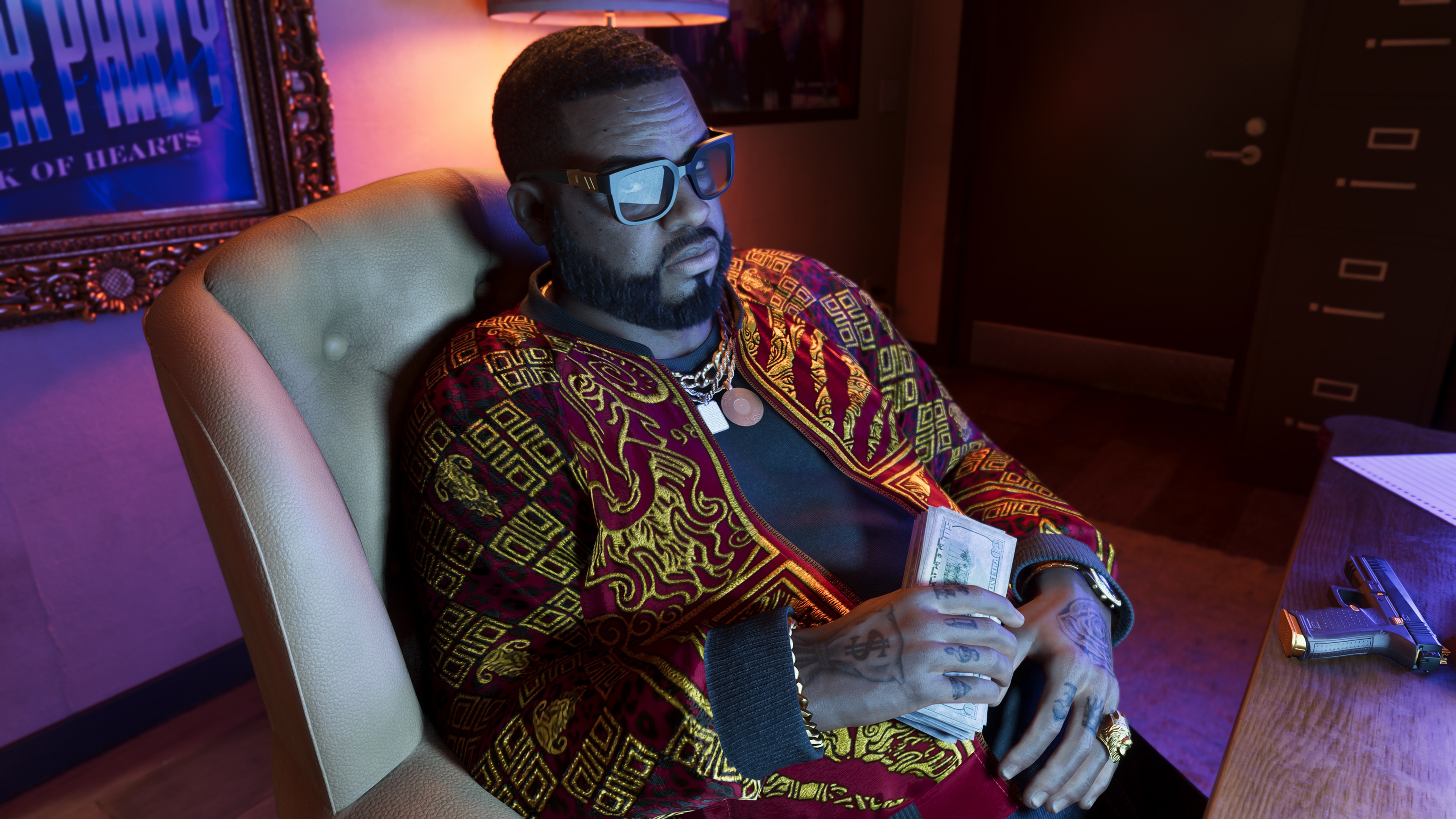
Quick Answer: In the GTA 6 trailer, a subtle but impressive detail shows Lucia’s hair casting a shadow on Jason’s face. This level of dynamic shadow interaction on hair is unprecedented in the series and highlights the advanced RAGE 9 engine’s lighting capabilities.
The Discovery: A Shadow That Speaks Volumes
A Reddit post by user u/BrunoLima7 has drawn attention to a fleeting moment in the GTA 6 trailer: as Lucia moves, her hair casts a soft, realistic shadow onto Jason’s face. The post notes that “the hair and lighting behave… in a way that looks incredibly solid and believable” – a detail that even many high-budget games today fail to achieve.
The observation, supported by a video from a Brazilian YouTuber, has resonated with the community. Comments on the thread reflect a mix of awe and impatience: “Press F” for those who cannot wait (u/KutthroaTURK), and “My thoughts exactly” (u/Karmacop5908) echoing the sentiment that this level of fidelity is rare.
Historical Context: The Evolution of Shadows in Rockstar Games
To understand why this detail matters, it helps to look back at how Rockstar has handled shadows in previous titles.
| Game | Shadow Technology | Hair Shadow Detail |
|---|---|---|
| GTA IV (2008) | Basic dynamic shadows, some blur | No dynamic hair shadowing |
| GTA V (2013) | Improved dynamic shadows, soft edges | Character hair used simplified geometry, no self-shadowing on others |
| Red Dead Redemption 2 (2018) | Advanced global illumination, contact shadows, subsurface scattering | Hair had self-shadowing but limited interaction with other characters’ shadows |
| GTA 6 (2025+) | RAGE 9 with ray tracing & per-strand lighting (observed) | Lucia’s hair casts a shadow on Jason – full dynamic interaction |
RDR2 was a major leap in realism, but even there, a character’s hair would rarely cast a detailed shadow on another character’s face. The GTA 6 trailer suggests that Rockstar’s RAGE 9 engine now simulates light interacting with hair strands at a granular level, producing shadows that mimic real-world diffusion.
What This Means for Gameplay and Immersion
Real-time cutscenes will look cinematic. Dialogues and emotional beats – especially between the two protagonists – will benefit from this lighting fidelity. If a simple hair shadow is this accurate, imagine how the game will handle rain, sunsets, or neon reflections in Vice City.
Dynamic lighting in gameplay. The same engine likely extends to gameplay sequences. During chase scenes or stealth missions, shadows cast by player abilities (like a character’s arm or weapon) could enhance positional awareness – though that remains speculative.
Performance considerations. Running per-strand lighting and shadow casting on hair is computationally expensive. This hints that Rockstar is either pushing the limits of current-gen consoles (PS5, Xbox Series X|S) or planning a PC version that fully utilizes hardware ray tracing. It also suggests that the game may not run at 60 FPS in all modes, as such detail often demands 30 FPS for stability.
Why This Matters for GTA Online 2
Rockstar’s new online mode, GTA Online 2, will likely carry over these visual advancements. If characters in Online have detailed hair and clothing shadows, player avatars will feel more grounded in the world. This could become a unique selling point over competitors like Cyberpunk 2077’s photomode or Fortnite’s stylized graphics. For role-players and content creators, the ability to capture cinematic shots with accurate lighting is a huge incentive.
Community Reaction: From Awe to Schizophrenia
The Reddit post’s score of 500 indicates strong interest, but the community is also showing signs of hype fatigue. A related post (also in the source context) describes a fan spotting a promotional game case in a Chinese mall – only to learn it was an empty display. “I am way too schizo for this game,” the user joked. This mix of obsessive analysis and self-awareness is typical of the GTA 6 waiting room.
Some fans argue that such microscopic scrutiny is pointless until actual gameplay footage is shown, while others celebrate it as evidence that Rockstar is pushing boundaries. The hair-shadow detail has been praised as “next-gen” without being gimmicky.
Technical Analysis: How RAGE 9 Achieves This
Without official documentation, we can infer that GTA 6 uses a combination of:
- Per-pixel lighting to compute shadows from individual hair strands.
- Screen-space reflections to handle transparency and volume.
- Ray-traced ambient occlusion (likely) to soften edges and avoid unrealistic hard shadows.
This is a notable upgrade from GTA V, which used pre-baked shadow maps for most characters. RDR2 introduced contact shadows, but hair was still rendered as a solid mass with a single shadow. GTA 6 appears to treat hair as a set of translucent fibers, allowing light to pass through and cast multiple, layered shadows.
Final Thoughts: Attention to Detail Defines Rockstar
One of Rockstar’s hallmarks is obsessive attention to small details that most players might never notice. From the turning radius of cars in GTA IV to the horse testicles shrinking in cold weather in RDR2, these touches create a living world. Lucia’s hair shadow is the latest example – a feature that may go unseen in the heat of a car chase but will elevate every intimate moment between the protagonists.
As we wait for a second trailer or a gameplay reveal, this Reddit post should remind us that GTA 6 is not just a bigger map or more guns – it’s a generational leap in visual simulation. And for the fans who are “too schizo,” that detail is exactly what they need to stay hyped.
Note: All observations are based on publicly available trailer footage. No official statements from Rockstar Games have confirmed the specific rendering techniques used.