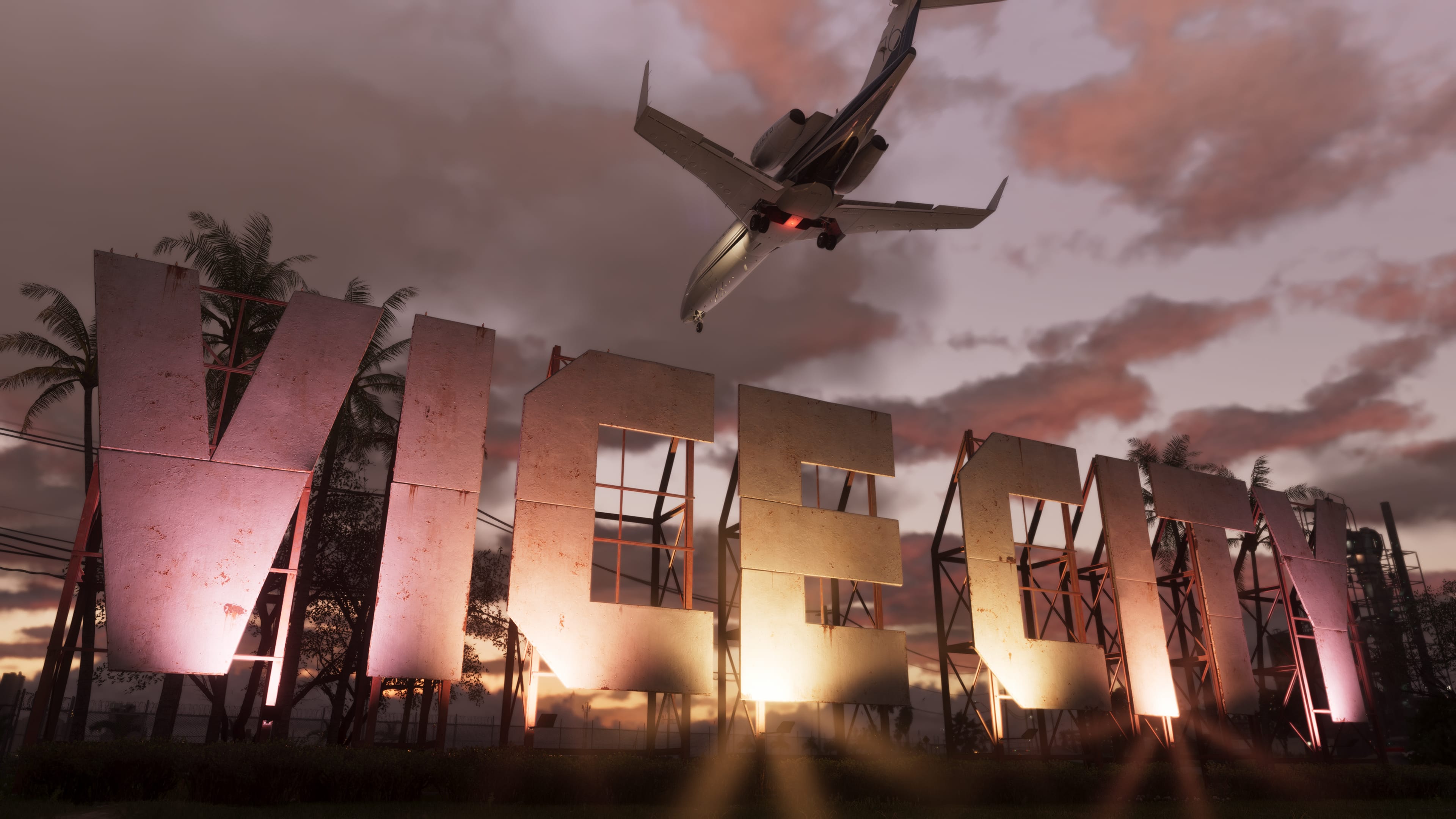
Quick Answer: Rockstar has filed a patent for a revolutionary NPC vehicle navigation system that promises denser traffic, smarter rerouting, distinct driver personalities, and realistic police chases—all with lower CPU/memory overhead. While not officially confirmed for GTA 6, the technology strongly aligns with the game’s rumored scale and ambition, potentially delivering the most immersive open-world traffic system yet.
The Patent That Could Transform GTA 6’s Open World
A recently surfaced Reddit thread on r/GTA6 has sparked intense discussion around a Rockstar patent initially thought to be disproven. The community quickly corrected the misconception: the patent is very real and, in fact, even more relevant to Grand Theft Auto VI than first assumed. The patent, titled “System and Method for Navigation of Vehicles in an Open World Game”, outlines a groundbreaking approach to managing thousands of NPC vehicles simultaneously without crippling CPU or memory performance.
For context, GTA V’s traffic system was already a technical marvel in 2013, but it relied on simple “reaction-based” AI: vehicles only responded to obstacles when they were nearly on top of them. This led to predictable traffic jams, unrealistic lane changes, and police chases that boiled down to a line of cops glued to the player’s bumper. Rockstar’s new patent directly addresses these limitations, and the implications for GTA 6 are enormous.
1. Massive Traffic Density with Lower Overhead
The patent explicitly tackles the performance-versus-density trade-off. By using a “hierarchical” navigation system that pre-computes routes for NPCs before they even spawn, Rockstar can drastically reduce the per-vehicle CPU cost. The result: far more vehicles in the world than GTA V could ever handle.
What This Means:
- Denser traffic on highways and city streets, making Vice City feel alive.
- Vehicles remain active even when the player is far away—no more vanishing cars when you turn around.
- Reduced pop-in and less noticeable despawning, preserving immersion.
In GTA V, the active vehicle limit was around 200 on last-gen consoles; even on PC, modders often hit caps around 400. Rockstar’s patent suggests a 5–10x increase in simultaneous NPC vehicles without frame drops. For GTA 6’s map (rumored to be 2.5x larger than GTA 5), this is essential.
2. NPC Vehicles That Plan Ahead
Perhaps the most exciting aspect is the shift from reactive to predictive driving. The patent criticizes the traditional approach where NPCs wait until an obstacle is right in front of them. Under the new system, vehicles will:
- Know about roadblocks, accidents, or congestion in advance.
- Reroute several intersections earlier, avoiding dead ends.
- Change lanes gradually to prepare for upcoming exits or turns.
- React intelligently to congestion—slowing down early or taking alternate roads.
Practical Example: Imagine a truck driver in GTA V hitting a sudden traffic jam on the highway. It slams the brakes and sits there. Under this patent, the same truck would receive a notification of the jam three blocks away, take the previous exit, and drive through side streets to its destination. The entire traffic flow becomes organic.
Historical Parallel: Red Dead Redemption 2’s animal AI already showed Rockstar’s ability to create autonomous ecosystems, but animal behavior is far simpler than city traffic. The new patent formalizes that intelligence for thousands of vehicles.
3. Distinct Driver Personalities
The patent details parameters for different driving profiles: acceleration, braking, top speed, cornering skill, and general ability. This means every NPC driver will behave uniquely based on an assigned “personality.”
Examples of Expected Driver Types:
- Cautious Senior: Accelerates slowly, brakes early, signals turns, stays in right lane.
- Aggressive Driver: Tailgates, rapid acceleration, sharp turns, weaves through traffic.
- Taxi Driver: Moderate speed, frequent lane changes, may stop suddenly for fares.
- Intoxicated Driver: Swerving, inconsistent speed, delayed reactions, runs red lights.
- Police Officer: Uses sirens to clear path, follows pursuit rules, but also respects traffic laws when off-duty.
Why This Matters for Gameplay:
- Chases become less predictable—you never know if the next car is a reckless driver or a cautious one.
- The world feels alive, with NPCs reacting to road conditions based on their “personality,” not a script.
- Emergent moments: an aggressive driver cuts you off, a taxi suddenly stops, a drunk driver crashes into a police barricade—all without scripted events.
4. Revolutionary Police Chases
The most GTA 6-specific part of the patent describes how NPCs generate routes through surrounding traffic during high-speed pursuits. Cops will no longer just follow the player’s position; they will:
- Evaluate gaps between vehicles and maneuver around them.
- Choose alternative lanes to close in from the side.
- Attempt interceptions by predicting player’s path.
- Box in the player using surrounding traffic.
Comparison to GTA V: In GTA V, police cars stream in from nowhere and form a single-file line behind you. The AI is simple—“follow waypoint behind player.” The patent describes an entirely different philosophy: police vehicles become proactive participants in a dynamic chase. They will flank you, cut through alleys, and even force you into collisions with civilian traffic.
Realism Boost: Chases will no longer look like a parade. Instead, they’ll resemble real high-speed pursuits where officers spread out, coordinate, and use the environment. This also ties into the wanted system—higher wanted levels could mean more aggressive, coordinated police tactics.
5. Smarter Traffic Generation & Despawning
The patent also covers a “density system” that dynamically populates the world based on location, time of day, and player proximity. Instead of simply spawning cars in front of the player and despawning behind, the new system:
- Prefers persistent traffic flow: Vehicles are generated with a purpose (driving to a specific destination) rather than randomly appearing.
- Uses a “bubble” approach: High-density zones (downtown, beaches) have more vehicles; low-density areas (swamps, countryside) have fewer.
- Reduces despawning artifacts: When a vehicle leaves the player’s immediate zone, it doesn’t vanish—it continues its journey on a low-fidelity simulation until it exits a larger radius.
Why This Matters: No more empty roads when you look back. The world will feel consistent and alive, with traffic flowing naturally across the entire map. This is a key part of making the rumored 2.5x GTA V map feel inhabited.
Rumors & Unconfirmed Theories
While the patent is a matter of public record (USPTO filing), its direct application to GTA 6 remains unconfirmed. Rockstar often patents technology that later appears in multiple titles, but the timing—filed during GTA 6’s development cycle—strongly suggests it’s part of the game’s engine, RAGE 9.
- Community speculation: Some Redditors argue the patent could be for GTA Online’s next iteration (GTA Online 2), where persistent traffic and police AI would enhance live events.
- Cross-game potential: The same system could be used for the next Red Dead game or even a new IP. However, the patent’s language (“urban environments”, “high-speed pursuits”) strongly points to a modern-day GTA.
- Technical feasibility: Modders have already pointed out that current-gen hardware (PS5, Xbox Series X) could handle such a system thanks to the high-speed SSD and CPU cores. The patent’s efficiency gains make it plausible even on last-gen, but Rockstar has already confirmed GTA 6 is current-gen only.
One interesting theory from the subreddit suggests that this patent could enable dynamic traffic jams that players can cause—start a crash on the highway and watch a multi-mile backup form with realistic driver reactions. That would be a first for the series.
Note: All discussions about GTA 6’s specific features based on this patent remain speculative. Rockstar has not confirmed that the patent will be implemented in the game. The information here is derived from the patent document and community analysis.
Why This Matters: More Than Just Pretty Traffic
At first glance, an AI traffic patent might seem minor, but it’s actually foundational to GTA 6’s core promise: an immersive, living world.
- Immersion: A city that feels real has traffic that behaves logically. No more magical disappearing cars or cops that teleport behind you.
- Emergent gameplay: Different driver personalities create random chaos. A drunk driver causing a pile-up, an aggressive driver road-raging—these become player-driven stories.
- Police chase evolution: The patent directly addresses one of GTA’s most iconic gameplay loops. Better AI means chases are more tense and require more skill to escape.
- Performance impact: Lower CPU/memory usage means Rockstar can allocate resources to other areas—better graphics, more interactive objects, larger draw distances.
The system also has implications for GTA Online 2. Imagine a freemode where traffic is persistent, NPCs have routines, and police chases involve dozens of officers using coordinated tactics. That would fundamentally change how players engage with the world.
Final Thoughts
The discovery of this patent has reignited excitement among the GTA 6 community. While we wait for Trailer 3 (expected late 2025) and the November 19, 2026 release date, technical details like this offer a glimpse into Rockstar’s ambitions. The patent suggests a generational leap in AI sophistication—one that could make Vice City feel truly alive.
For players who spent years criticizing GTA V’s traffic AI, this is a massive step forward. The question is no longer “Will GTA 6 have better traffic?” but “How will this system change the way we play?”