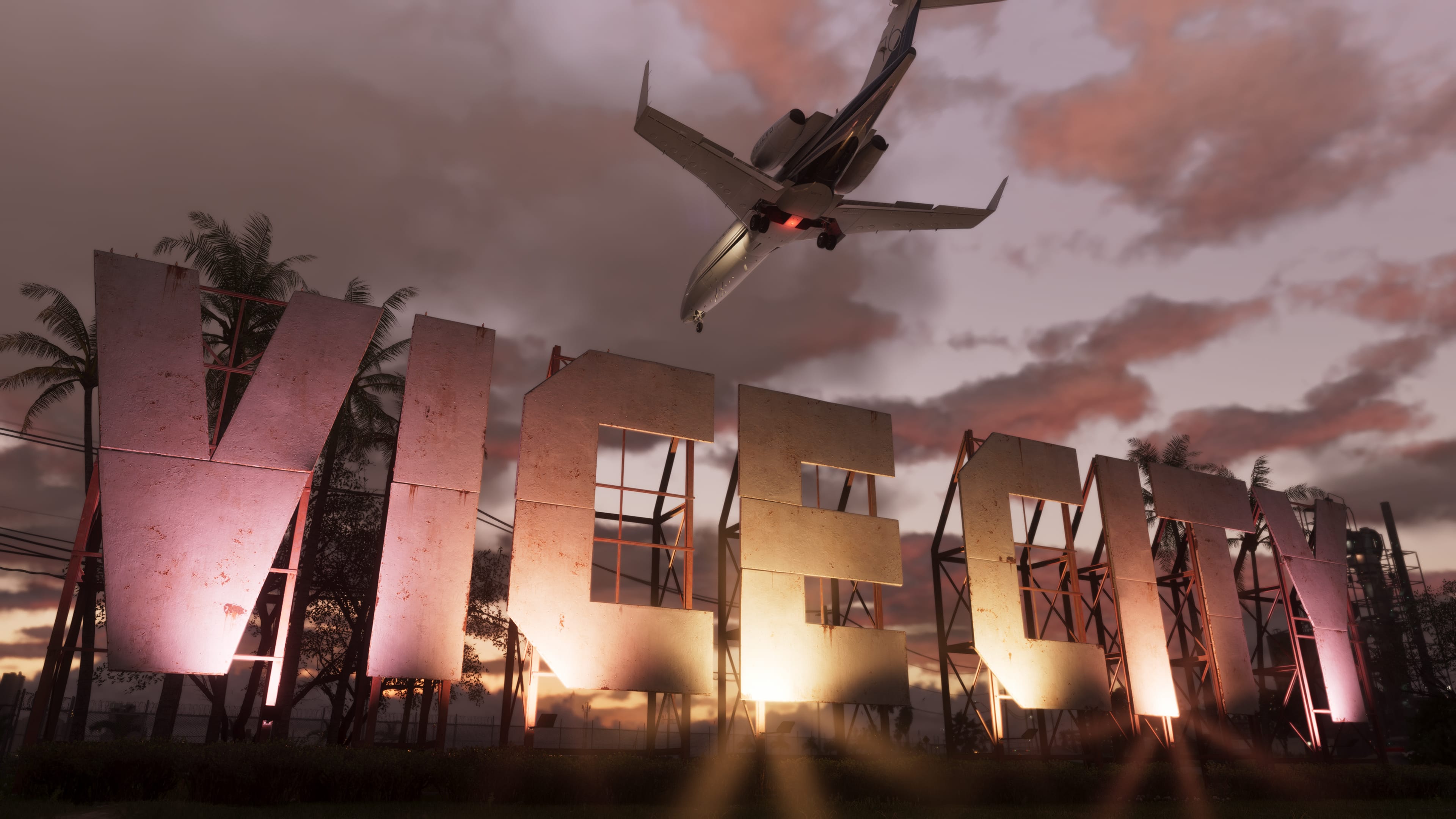
Quick Answer: GTA 6 marks the long-awaited return to Vice City, Rockstar’s fictional version of Miami. Unlike the 2002 original, this Vice City is a sprawling, modern metropolis built on the RAGE 9 engine with unprecedented detail, multiple distinct districts, enterable buildings, and a dynamic weather system that brings the city to life around the clock.
The History of Vice City in GTA
Vice City first appeared in 2002’s Grand Theft Auto: Vice City, a game that became one of the best-selling PlayStation 2 titles of all time. Set in a neon-soaked, 1980s version of Miami, it captured players’ imaginations with its pastel art-deco architecture, synth-heavy soundtrack, and Scarface-inspired storyline.
The original Vice City map was roughly 5.6 square kilometers – tiny by modern standards, but packed with personality. Every street felt hand-crafted, every district had a distinct identity, and the whole city pulsed with an atmosphere that no other open-world game has managed to replicate. For many players, Vice City remains the definitive GTA experience.
Rockstar revisited the city in 2006 with GTA: Vice City Stories, a prequel for the PSP that expanded the map slightly and added new areas. But after that, Vice City disappeared from the mainline GTA series for over two decades. GTA IV took players back to Liberty City (New York), and GTA V introduced Los Santos (Los Angeles).
Now, with GTA 6, Vice City is back – and it is bigger, more detailed, and more alive than anyone could have imagined.
Why Fans Wanted Vice City Back
The demand for a Vice City return has been one of the loudest and most consistent requests in the GTA community. Fan-made trailers, concept art, and forum posts begging for a modern Vice City have circulated for years. There are several reasons for this enduring appeal:
- Nostalgia – Vice City represents a golden era of gaming for millions of players who grew up with the PS2.
- Miami’s visual potential – Few cities in the world offer as much visual diversity as Miami: neon-lit nightlife, pristine beaches, colorful street art, luxury waterfronts, and gritty urban areas all within a short drive.
- Cultural richness – Miami’s blend of Latin American, Caribbean, and American cultures creates a setting that is vibrant, complex, and endlessly interesting.
- Satirical goldmine – Modern Miami, with its crypto bros, influencer culture, luxury excess, and political drama, is a perfect target for Rockstar’s trademark social commentary.
Rockstar clearly agreed. When the first GTA 6 trailer dropped, the opening shots of a Florida sunset over a neon-lit beachfront confirmed what fans had hoped for: Vice City was coming home.
How GTA 6’s Vice City Differs from the Original
The differences between the 2002 Vice City and the GTA 6 version are staggering. This is not a remaster or a simple upgrade – it is a ground-up reinvention that takes advantage of two decades of technological advancement.
Scale and Size
The original Vice City was a compact playground that could be crossed in a few minutes of driving. GTA 6’s Vice City is a true metropolitan area, one of the largest and most detailed urban environments ever created in a video game.
| Feature | GTA: Vice City (2002) | GTA 6 Vice City (2026) |
|---|---|---|
| Approximate urban area | ~5.6 km sq (entire map) | Part of a 180+ km sq state |
| Districts | ~6 main areas | 10+ confirmed districts |
| Enterable buildings | A handful | Hundreds confirmed |
| Transportation | Cars, boats, motorcycles | Cars, boats, planes, helicopters, metro |
| Population density | Sparse NPCs | Dense, reactive crowds |
| Waterfront | Limited | Extensive marinas, beaches, ports |
| Time period | 1986 | Modern day (2020s) |
The modern Vice City is not just bigger – it is qualitatively different. The density of activity, the number of interactive elements, and the sheer visual fidelity create an experience that the PS2-era original could never have achieved.
Modern Setting vs. the 1980s
One of the most significant changes is the time period. The original Vice City was set in 1986, dripping with 1980s nostalgia: pastel suits, synth-pop, neon lights, and Scarface excess. GTA 6’s Vice City is set in the modern day, which means the aesthetic has evolved.
Instead of 80s excess, the modern Vice City reflects contemporary Miami: social media influencers, cryptocurrency culture, luxury high-rise living, international tourism, and the city’s massive Latin American influence. The neon is still there – it is Miami, after all – but it now coexists with LED screens, glass skyscrapers, and a tech-driven economy.
This modern setting also allows Rockstar to satirize current culture in ways that feel fresh and relevant. Expect jabs at influencer culture, the gig economy, political polarization, and the absurdity of modern American excess – all filtered through Rockstar’s sharp, darkly comedic lens.
Districts and Neighborhoods Confirmed
GTA 6’s Vice City is divided into multiple distinct districts, each with its own visual identity, culture, and atmosphere. Based on trailer analysis and official materials, here are the confirmed and strongly suspected districts:
Vice Beach (South Beach Equivalent)
The crown jewel of Vice City’s tourist scene. Vice Beach features a long stretch of white sand, colorful lifeguard stands, luxury hotels, and a boardwalk packed with restaurants, bars, and shops. The architecture is heavily inspired by the art-deco buildings of Miami’s real South Beach, with pastel facades, neon signage, and curved lines.
Vice Beach appears to be one of the primary social hubs in the game, with beach parties, outdoor events, and a constant flow of tourists and locals. It is also where much of the game’s nightlife scene takes place.
Ocean Drive
Running along the Vice Beach waterfront, Ocean Drive is a near-recreation of Miami’s iconic real-world street. Lined with art-deco buildings, restaurants with outdoor seating, and palm trees, it is one of the most visually distinctive locations in the game. At night, neon signs light up the street in a kaleidoscope of color.
Little Haiti / Haitian Quarter
A district inspired by Miami’s real Little Haiti neighborhood, this area features colorful murals, Caribbean restaurants, and a strong cultural identity. It is likely to play a role in the game’s storyline, given the criminal undertones associated with some of the area’s characters.
Wynwood-Style Art District
An entire neighborhood covered in vibrant street art, graffiti, and murals, clearly inspired by Miami’s famous Wynwood Walls district. This area serves as Vice City’s creative hub, with galleries, studios, hipster coffee shops, and a distinctly younger, artsier crowd.
Downtown Vice City
The financial and commercial heart of the city. Downtown features glass skyscrapers, corporate offices, elevated highways, and a dense urban grid. It is a stark contrast to the laid-back beachfront areas, with a more intense, fast-paced atmosphere. The skyline is dominated by tall buildings, many of which appear to be enterable.
Little Havana Equivalent
A district reflecting Miami’s famous Cuban-American community. Expect domino parks, cigar shops, classic cars, Latin music, and family-owned restaurants. This neighborhood brings cultural depth to Vice City and grounds the game in the real-world demographics that make Miami unique.
The Port District
Vice City’s waterfront includes a massive port area with shipping containers, cranes, warehouses, and industrial infrastructure. This district is grittier than the tourist areas and is likely a key location for the game’s criminal enterprises, smuggling operations, and underground economy.
Star Island / Luxury Island
A private island community accessible by bridge, featuring massive waterfront mansions with private docks, manicured lawns, and luxury cars in the driveways. This is where Vice City’s ultra-wealthy residents live, and it serves as a visual representation of the city’s extreme wealth inequality.
Landmarks and Iconic Locations
GTA 6’s Vice City is packed with landmarks that reference real Miami locations. Rockstar has always been brilliant at transforming real places into satirical versions, and GTA 6 takes this to a new level.
The Guitar Hotel
A massive, guitar-shaped resort visible on the Vice City skyline, clearly inspired by the Seminole Hard Rock Hotel and Casino in Hollywood, Florida. This building serves as an unmistakable landmark and a brilliant piece of Rockstar satire aimed at Florida’s love of oversized, gaudy attractions.
Bayside Marketplace Equivalent
An open-air shopping and entertainment complex along the waterfront, modeled after Miami’s real Bayside Marketplace. Expect tourist shops, restaurants with waterfront views, street performers, and a lively atmosphere.
Causeway Bridge System
Long, sweeping bridges connecting the mainland to barrier islands, echoing Miami’s MacArthur Causeway and Venetian Causeway. These bridges are not just transit routes – they are scenic experiences, offering panoramic views of the city skyline, the ocean, and the waterfront mansions along the way.
Vice City Marina
A large marina filled with luxury yachts, sailboats, and speedboats. This area reflects Miami’s boating culture and provides access to water-based activities, missions, and exploration.
The Modern Reimagining of Miami
What makes GTA 6’s Vice City so compelling is how it captures the essence of modern Miami while adding Rockstar’s signature satirical twist. The city is not a one-to-one recreation of Miami – it is an interpretation, an exaggeration, a funhouse mirror reflection that amplifies everything that makes Miami both fascinating and absurd.
The city feels alive in a way that previous GTA locations have not. Crowds react to events around them. Traffic flows realistically. The weather changes dynamically, with sudden tropical downpours that send NPCs running for cover. The neon signs reflect off wet streets after a rainstorm. The beach is crowded during the day and the clubs are packed at night.
This level of environmental storytelling and world-building is only possible thanks to the RAGE 9 engine, which allows for real-time global illumination, advanced particle systems, and crowd behavior that would have been impossible on previous hardware.
Vice City’s Role in the Story
Vice City is not just a backdrop in GTA 6 – it is deeply intertwined with the story of protagonists Lucia Caminos and Jason Duval. The city’s criminal underworld, from its port smuggling operations to its luxury drug trade, serves as the primary setting for the game’s narrative.
Lucia, the first female protagonist in a mainline GTA game, appears to have deep roots in Vice City’s community. Jason brings a different perspective, and together their story explores the city from multiple angles – from the streets to the penthouses, from the ports to the private islands.
Rumors & Unconfirmed Theories
Fully Functional Nightclubs
Leaks suggest that Vice City’s nightclubs will be fully interactive environments where players can dance, socialize, and potentially run businesses. This would be a significant evolution from GTA Online’s nightclub ownership, bringing the experience into the single-player campaign with much greater depth.
Vice City Metro System
Trailer footage has shown what appears to be an underground metro system with multiple stations across the city. If confirmed, this would be the first functional subway system in a GTA game set in Vice City, providing a fast-travel option and adding another layer of realism to the urban environment.
Hurricane Events
Given the Florida setting, rumors have circulated that GTA 6 will include dynamic hurricane events that temporarily reshape the city – flooding streets, damaging buildings, and creating chaos. While dynamic weather is confirmed, full hurricane events remain unverified.
Evolving Cityscape
Some leaks suggest that Vice City may evolve over the course of the story, with new buildings under construction, businesses opening and closing, and neighborhoods changing based on player actions and story progression. If true, this would be a groundbreaking feature that makes the city feel like a living, breathing entity.
Vice City in GTA Online
While not confirmed, it is widely expected that GTA 6’s Vice City will eventually serve as the setting for the next iteration of GTA Online. The city’s diverse districts and extensive infrastructure seem tailor-made for multiplayer mayhem, and Rockstar’s continued success with GTA Online makes a follow-up virtually certain.
Note: All features mentioned in this section are based on unconfirmed leaks, community analysis, and speculation. They may differ from the final game.