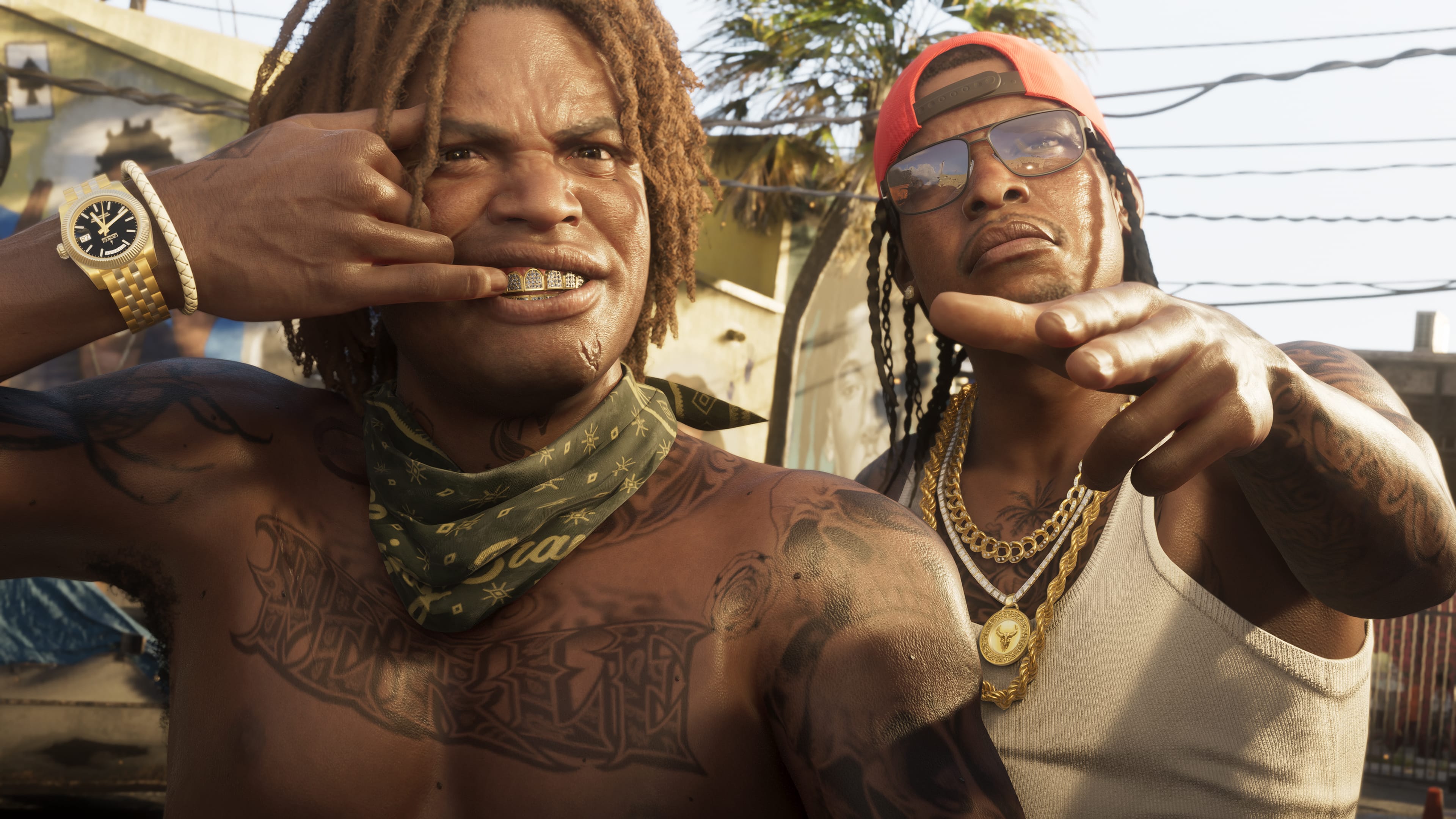
Quick Answer: GTA 6 is reportedly the most expensive video game ever made. Industry reports have estimated its combined development and marketing budget at roughly $2 billion, far outpacing every other title in the medium’s history. Neither Rockstar nor Take-Two has confirmed the figure, but the scale is consistent with the game’s decade-long development, its studio footprint, and its ambitions for GTA Online 2.
The Budget Conversation Pulls GTA 6 Back Into Focus
Engadget’s latest piece on the video game industry strikes a simple, provocative note: even the wildest budgets in gaming can’t hold a candle to GTA 6. The headline is about more than a single game’s cost. It reflects the growing financial gap between a handful of mega-publishers and everyone else in AAA development.
For GTA 6, that conversation started long before the game’s November 19, 2026 release date was set. Reports about the game’s budget have circulated for years, and they’ve only intensified as Rockstar enters the final stretch of development. But what does a $2 billion game actually look like? And where does that money go?
We’ll break it down, starting with the numbers that have been publicly reported.
Where the Reported $2 Billion Figure Comes From
The most commonly cited estimate of GTA 6’s budget began circulating in 2022, when a British newspaper reported that the game’s development costs alone had reached a level that made it one of the most expensive entertainment products ever created. Subsequent reports pushed the combined figure — development plus global marketing — to somewhere in the neighborhood of $2 billion.
Neither Rockstar nor Take-Two has ever acknowledged this number. There’s good reason for that: publishers almost never publicize production budgets, because doing so gives competitors and investors a dollar sign to attach to a project that is fundamentally about creative ambition. That’s true even when the number would be a useful marketing talking point, which this one would be.
Still, the $2 billion figure tracks with what we know about Rockstar’s operations. Development on GTA 6 is believed to have started around 2015, which means the game will have spent more than a decade in production by the time it launches. During that time, Rockstar has grown into a global development network, with multiple studios contributing teams for motion capture, engineering, open-world design, and testing. The sheer labor hours involved in building a city the size of Vice City and the surrounding state of Leonida are staggering.
It’s also worth remembering that GTA 6 is not just a game — it’s the foundation of GTA Online 2, which invites a different conversation about infrastructure, servers, and long-term live-service development. That’s not the same as a story-driven AAA campaign’s budget, but it’s part of why the total cost is so high.
A Budget Comparison Table That Puts GTA 6 in Perspective
The table below gathers widely reported estimates for some of the most expensive games ever made. These numbers are not official — Rockstar, Activision, and CD Projekt have never confirmed exact budgets — but they’re the figures most often cited by industry analysts and journalists. Read the table as a guide to scale, not a precise accounting ledger.
| Game | Reported Total Cost | Development Window | Lifetime Status |
|---|---|---|---|
| GTA V | ~$265 million | 2008-2013 (5 years) | Over 200 million units sold |
| Red Dead Redemption 2 | ~$400-500 million | 2010-2018 (8 years) | Over 60 million units sold |
| Cyberpunk 2077 | ~$300 million (reported) | 2011-2020 (9 years) | Over 30 million units sold |
| Star Citizen | ~$700 million raised via crowdfunding | Ongoing | Still in development |
| Call of Duty: Modern Warfare 2 (2022) | ~$250 million (reported) | ~4 years | Strong commercial performance |
| GTA 6 | ~$2 billion (dev + marketing, reported) | ~2015-2026 (11 years) | Not yet released |
The most striking thing about this table isn’t just the absolute number — it’s the ratio. GTA 6’s reported budget is roughly eight times that of GTA V, and four times that of Red Dead Redemption 2. Even accounting for inflation, that multiplication is extraordinary. A game that costs four times as much as its predecessor needs to do more than sell well; it needs to become a cultural event that sustains itself for the better part of a decade.
Why Development Costs Have Grown So Dramatically
It would be easy to blame inflation and leave it there, but the story is more interesting than that. Rockstar’s development costs have risen for a series of concrete reasons, and most of them are visible in GTA 6’s feature list.
First, the world itself is bigger. According to Rockstar’s own description and subsequent map analysis, GTA 6’s Leonida and Vice City area is roughly 2.5 times larger than the map of GTA V’s San Andreas. Simply building terrain and roads at that scale isn’t the expensive part; filling every district with working businesses, dynamic NPCs, traffic patterns, and interior spaces is what balloons the budget. A larger world with dead space would be cheap. A larger world with simulated life is not.
Second, RAGE 9, Rockstar’s proprietary engine, has been redesigned to support features that GTA V couldn’t even approximate. Physics, water simulation, dynamic lighting, and dense crowd AI all require new systems and new rendering pipelines. Each system costs years of engineering time.
Third, storytelling structures have become more ambitious. GTA 6 features a dual-protagonist system — Lucia and Jason — which means the narrative is literally twice as complex to write, animate, and execute. The wanted system has also been expanded to react to player actions more intelligently, and building interiors are being modeled in far greater number than in any previous Rockstar game. All of that is labor-intensive.
Fourth, marketing. A worldwide game launch in 2026 is effectively a global product release: regional pricing research, billboard campaigns, trailer rollouts, influencer previews, packaging, and launch events. Rockstar has already spent heavily on trailers and promotional materials, and that spending extends through the release window and beyond.
What the Budget Means for Players
The most immediate player-facing effect is the price. Rockstar and Take-Two have confirmed that GTA 6 will launch at $79.99 for the Standard Edition and $99.99 for the Ultimate Edition. That’s the most expensive standard base price ever attached to a mainline GTA release, and it’s a direct consequence of rising production costs. The price guide covers the breakdown in detail.
A more subtle effect is the expectation of quality. When you spend $80 on a game, you have a right to expect something extraordinary. Rockstar has built its reputation on delivering precisely that, and the $2 billion investment is, in part, a hedge: the company is buying itself the resources to polish the game to a level that justifies its price.
There’s also a gameplay consequence. A game with this much budget can’t afford to be a one-and-done experience. Rockstar needs players to stay connected for years, which is why GTA Online 2 was confirmed alongside the base game. From the player’s perspective, that means more regular content updates, a more stable live-service architecture, and likely more extensive monetization systems. It’s the same model that turned GTA Online into a multi-billion-dollar franchise, but applied on a larger canvas.
Historical Context: GTA V and RDR2
GTA V’s reported $265 million budget felt obscene in 2013. The game sold tens of millions of copies in its first weeks, and after a decade of GTA Online updates, its lifetime revenue has put it among the highest-grossing entertainment products ever made.
RDR2 followed with an estimated budget of $400-500 million and sold over 60 million units, proving that Rockstar could repeat the formula in a different setting. But the gap between RDR2 and GTA 6 is the biggest single-generation jump in the studio’s history.
Why the aggressive leap? Partly because GTA V’s online component demonstrated just how much recurring revenue a well-supported online mode can produce. Rockstar isn’t spending $2 billion to sell 50 million copies of a single-player campaign; it’s spending that money to launch the next decade of GTA Online, and to make sure the single-player world is rich enough to keep players engaged while the online mode matures. For a deeper comparison of how GTA 6’s systems differ from GTA V’s, our systems comparison covers the key changes.
The Sustainability Question
Is a $2 billion game a good business decision? Simple math suggests GTA 6 enters the market with an exceptionally high break-even point. If Take-Two nets roughly $43 per unit after platform fees and retail margins — the exact figure varies, but a reasonable estimate is in that range — the publisher needs to move over 45 million units just to cover the reported budget. That’s achievable for a GTA title, since GTA V moved far beyond that, but it leaves no room for a misfire.
The safety net, of course, is GTA Online 2. Microtransactions, battle passes, and premium content will not only cover marketing costs but turn the game into a years-long revenue stream. In the industry’s modern era, the biggest budgets are always paired with the biggest live-service ambitions. GTA 6 is the clearest example yet: a $2 billion game designed to generate billions back within a few years, and then grow from there.
For players, the sustainability question comes down to what kind of game we get. A publisher that needs to recoup $2 billion will be naturally conservative about innovation and intensely focused on player retention. Rockstar has always balanced that pressure by shipping technically ambitious games that still feel like Rockstar games. The fact that GTA 6 is releasing on PS5 and Xbox Series X|S, with a PC version coming later, gives it access to the largest potential audience in the franchise’s history. That alone meaningfully raises the ceiling on its revenue.
Rumors & Unconfirmed Theories
The $2 billion figure is the biggest rumor attached to GTA 6’s production, but it’s far from the only one. Here’s what has been floated by the press and the community, all unconfirmed:
- The budget reportedly covers both development and marketing, but no official breakdown exists. Some reports have claimed the marketing budget alone could surpass $400 million, which would still be larger than the total reported budget of GTA V.
- A recurring theory suggests GTA 6’s development began as early as 2014, immediately after GTA V’s original release. That would mean a production cycle of more than a decade, which aligns with Rockstar’s hiring patterns but has never been officially confirmed.
- Some analysts have guessed that Take-Two’s revenue projections for FY2027 assume first-year GTA 6 sales in the range of 40-50 million copies. This is speculation based on investor modeling, but it’s consistent with the company’s aggressive pricing and pre-order push.
Note: All figures and theories above are reported or speculative. Rockstar and Take-Two have never officially disclosed the budget, the exact development timeline, or internal revenue targets for GTA 6.
Final Thoughts
A $2 billion video game sounds absurd until you look at the industry around it. Rockstar is playing a different game from almost everyone else in the business — a game where the largest possible budget is an investment in becoming a permanent fixture of global entertainment. What we know is that GTA 6 carries greater risk and greater potential than any title in Rockstar’s four-decade history. For players who’ve waited through eleven years of speculation, the payoff will be judged not by the balance sheet but by the experience when the game finally arrives on November 19, 2026.
That date is now official, and pre-orders are open. If you’re trying to plan your own purchase, the pre-order guide and editions guide are the best places to start. And for a more granular look at how this budget translates into game design, our RAGE 9 engine explainer is the deepest dive on the technology side.