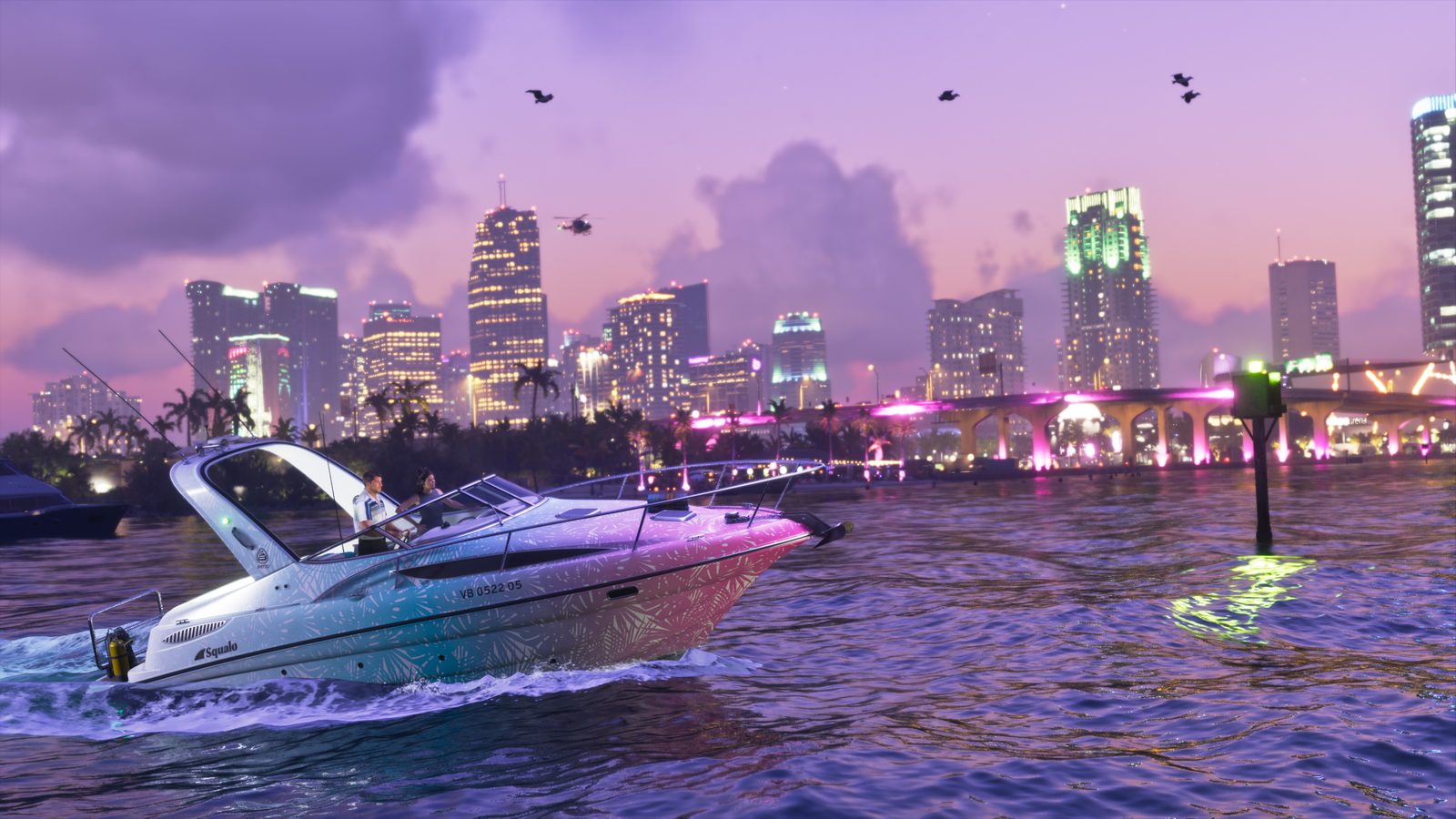
Quick Answer: According to IGN, a Florida nudist resort has been fighting a wave of GTA 6-themed user reviews, and the resort’s owner has responded publicly — a response IGN frames around the line “We will not pay, we will not negotiate.” It is a strange story in isolation, but it is also one of the clearest signs yet of how much real-world energy Grand Theft Auto 6 is generating in Florida. The game itself is unaffected: GTA 6 launches November 19, 2026 on PS5 and Xbox Series X|S, with pre-orders open since June 25, 2026.
Reading the Headline Carefully
IGN’s headline does three things at once. It names the subject (a nudist resort), the problem (a wave of GTA 6 reviews), and the reaction (its owner speaking up), and it leads with a quoted line: “We will not pay, we will not negotiate.” A few conclusions follow from that framing. A few do not.
The word “reviews” almost certainly means user reviews on a public business listing — Google’s is the obvious candidate — rather than professional press coverage. No resort “combats” critic write-ups; any business, however, can be buried under star ratings from people who have never been within a hundred miles of the property. Google’s own review policies explicitly prohibit off-topic reviews, and owners have two practical tools: flag the reviews for removal, or answer them in public where prospective guests can see the reply.
That second option is what the reported response looks like. A line like “we will not pay, we will not negotiate” reads less like a customer-service apology and more like a refusal to meet a demand — though the report as summarized does not spell out who was asking for what, or whether anything was being demanded at all.
Just as important are the blanks. The report does not establish which resort, how many reviews arrived, whether the wave was organized, or how long it has been going on. Those gaps matter, because the most useful way to read this story is not as a single incident but as a symptom. It is one more data point in a pattern that has been building since December 2023, when the first GTA 6 trailer turned a fictional state called Leonida into a real-world scavenger hunt.
Rockstar’s Worlds Are Built From Real Addresses
None of this happens in a vacuum. Rockstar has spent two and a half decades constructing its settings out of recognizable geography and then filing the serial numbers off.
Vice City, the 2002 original, is 1986 Miami with the volume turned up: the neon strip, the pastel hotels, the cocaine-boom mansions. The Vercetti Estate is widely noted by fans to echo the real Casa Casuarina — the Versace Mansion on Ocean Drive — down to its Mediterranean ornamentation. GTA V’s Los Santos is Los Angeles reorganized: Vespucci Beach maps onto Venice Beach, Del Perro Pier onto Santa Monica Pier, and the grim shoreline town of Sandy Shores onto the scattered communities around the Salton Sea. Players have long identified the in-game roadside restaurant Hookies with Neptune’s Net, a real shack on the Pacific Coast Highway with a genuine reputation of its own.
So when Rockstar says “Leonida,” a meaningful chunk of the audience does not hear a fictional state. It hears Florida with the names changed. Trailers get dissected frame by frame by mapping communities that have gotten remarkably good at geolocating a palm tree and a causeway sign. Storefront lettering, license plates, boat registrations, highway shields — all of it becomes evidence.
That is the psychological bridge to this story. After two years of treating Florida as a puzzle to be solved, a real nudist resort stops being a private business and starts being a candidate location. Nothing in the reporting suggests the resort appears in the game. It only has to be plausible Florida.
Florida Is the Richest Comedy Mine Rockstar Has Ever Tapped
There is a second reason a nudist resort in particular drew this kind of attention: Florida has hosted established naturist communities for decades, and the state’s reputation for institutional weirdness is the exact register GTA satirizes best. Rockstar has always parodied real commercial archetypes rather than inventing them from nothing — Burger Shot for the fast-food chains, Cluckin’ Bell for the chicken wars, Vanilla Unicorn for the strip-mall club, Tequi-La-La and Bahama Mamas West for real Sunset Strip venues.
A game set in a state-shaped sandbox full of airboat operators, alligator shows, roadside attractions and clothing-optional resorts is practically a target-rich environment. A naturist resort is the kind of thing Rockstar would plausibly fold into Leonida’s tapestry rather than invent.
The flip side of that habit is legal exposure, and Rockstar has tested those boundaries before. Lindsay Lohan sued over GTA V, arguing an in-game character resembled her; a New York court dismissed the case and an appeal failed in 2018. Rockstar’s defense has consistently been that its satirical universe is broad parody, not portraiture. That distinction is exactly what keeps a fictional Leonida from being read as a documentary about any single real business — and it is why a real resort would have no obvious claim, or obligation, regarding GTA 6 at all.
Fandom Spilling Onto Real Property: A Short History
This reflex — fans treating a fictional setting’s real-world counterpart as part of the fandom’s territory — has escalated with every generation of GTA. Games are not unique here, either; television has produced the same fallout for years.
| Year | Trigger | Real-world target | What happened |
|---|---|---|---|
| 2002 | Vice City | Miami landmarks | A 1986 Miami pastiche became shorthand for the city; real Ocean Drive was treated as the game’s map by fans and, at times, by travel coverage. |
| 2013 | GTA V | Los Angeles / the Salton Sea | Fan trailer-geolocation projects matched in-game streets to real intersections; Sandy Shores put the Salton Sea’s shoreline in front of millions of players. |
| 2015 | Breaking Bad | A private house in Albuquerque | Widely reported that fans threw pizzas onto the roof of the real residence; the owner spoke publicly and eventually fenced the property. |
| 2024 | Baby Reindeer | A London pub | The pub was reportedly flooded with messages and reviews tied to the series, and the landlord spoke out about the fallout. |
| 2023–2026 | GTA 6 | Florida | Frame-by-frame mapping of the trailers; per IGN, review waves on at least one real business, and a contested city-meeting outcome in Miami tied to the game. |
What the table shows is not that fans behave worse than before, but that the surface area where fiction touches real life keeps expanding. A 2013 trailer could be mapped by a few hundred dedicated posters. A 2026 trailer is mapped within hours by thousands, and the results are then applied to real businesses, real listings, and real inboxes.
ION’s separate report — describing a Miami city meeting where a GTA 6-related item won approval controversially, with enough money attached to fix a football field — is the same phenomenon at a larger scale. When the game and the place share a name, the line between marketing and municipal business gets blurry fast.
What a Review Wave Actually Costs a Small Business
Review flooding rarely looks like a catastrophe from the outside. It looks like a Google listing where the most recent twenty ratings are five stars reading “can’t wait for November,” “Leonida looks amazing,” or simply a string of emoji. For a restaurant in a major city, that is noise. For a niche resort that depends on a small pool of high-intent searchers — people actively looking for a naturist property in Florida — it is more disruptive than it appears.
Three practical problems compound. First, relevance: review text is one of the signals Google uses to match a listing to a query, and off-theme reviews blur what the listing is about. Second, trust: prospective guests scanning recent ratings see activity that clearly has nothing to do with the hospitality they are evaluating, which forces the owner to spend their reply budget on explanation rather than persuasion. Third, moderation burden: flagging dozens or hundreds of reviews is manual work, and removal is never instant.
There is also an upside the report does not address. Attention is attention, and small Florida attractions have historically benefited from being associated with big pop-culture moments, however uninvited. A resort that ends up as a footnote in GTA 6’s pre-launch news cycle has, in effect, received a burst of earned media no advertising budget would have bought.
The public response matters here for a reason most coverage glosses over: owners do not usually post defiant statements about review floods because it makes the flood worse in the short term. They do it to control the narrative they can control — the one visible to every future guest who searches their name for months afterward.
Why This Is Happening in September 2026
As of today, GTA 6 is sixty-eight days from launch. Pre-orders opened June 25, 2026, with the Standard Edition at $79.99 and the Ultimate Edition at $99.99, so the most-wanted information — date, price, platforms, editions — has been settled for the entire summer. What remains scarce is content.
Rockstar’s marketing rhythm has always been unusually sparse, and it is arguably the single biggest driver of fan behavior like this. GTA V’s first trailer landed in November 2011; the second arrived roughly a year later; the full campaign did not ramp until 2013. GTA 6 has followed a similarly patient cadence, spacing its reveals far apart and letting the community fill the silence. When official material is scarce, speculation becomes a hobby, then a habit, then a reflex aimed at anything that resembles the setting.
That reflex now has an audience of a size the franchise has never had before. It also has infrastructure: mapping projects, wikis, and databases that catalog every confirmed detail of Leonida in structured form rather than in forum threads. If you want to see how much of the map is already documented before release, the site’s map size analysis and the Leonida location hub are the fastest starting points.
What This Means for Players
The honest answer is that none of this changes the game. There is no indication that a real resort’s review section has any bearing on Leonida’s design, and Rockstar has not commented on it. What the story does signal is scale. A franchise preparing its first new numbered entry in thirteen years has accumulated enough cultural pressure that its fandom now produces real economic side effects in the state it is satirizing — before a single copy has been sold.
For players, the practical read is this: expect more of it between now and November 19. Florida businesses whose names, signs, or locations resemble things in Leonida should probably know their Google listing is a search term now. And for anyone tracking the game itself, the confirmed picture remains steady — the release date is locked, pre-orders are live, and the countdown tool tracks the remaining weeks down to the hour.
Rumors & Unconfirmed Theories
Is the resort in GTA 6? Nothing in the IGN report claims it is, and Rockstar has said nothing. The company has historically revealed locations through trailers and Newswire posts rather than confirming them in response to press coverage, so an absence of comment proves nothing either way. Treat this as unconfirmed.
Was the review wave coordinated? Also unconfirmed. It does not take an organized campaign to produce this outcome; a single popular post pointing at a business that looks like it belongs in Leonida can generate dozens of ratings in an afternoon. The report does not describe any evidence of coordination, and neither should readers assume it.
Will Leonida include a naturist resort parody? This is community speculation built on franchise precedent — Rockstar has consistently mirrored real Floridian and Southern Californian institutions rather than inventing analogues wholesale. Given that Leonida covers a state with a long-established naturist community, the odds seem reasonable, but no official material confirms it. If it happens, expect the parallel to be obvious enough to be recognizable and altered enough to be legally distinct, following the same logic that produced Hookies and Vanilla Unicorn.
Do mapping communities always get it right? No, and that history is worth remembering. Fan geolocation efforts on GTA V trailers produced confident matches that turned out to be wrong, and early GTA 6 trailer analysis included disputed claims about which real structures certain shots corresponded to. Enthusiasm and accuracy are different things, and the same caution applies to any real business being tied to an unreleased game.
Note: These items are unconfirmed. They are included as community speculation and reasoned analysis, not as verified information about GTA 6 or about any real business mentioned in third-party reporting.
The Bottom Line
The story itself is small: a Florida resort, a flood of off-topic reviews, and an owner who decided to answer in public rather than wait for the tide to go out. But it belongs to a category that will only grow between now and November 19 — moments where a fictional state with a real-world skeleton produces consequences for real people living in the place it was modeled on.
For Rockstar, that is a double-edged position. The verisimilitude that makes Leonida feel authentic is the same quality that turns real Florida into a target for the fandom’s attention. For the resort, it is an uninvited marketing event with an unpredictable half-life. And for players, it is a reminder that GTA 6’s launch is no longer just a product release; it is a cultural event with a physical footprint in the state it parodies.