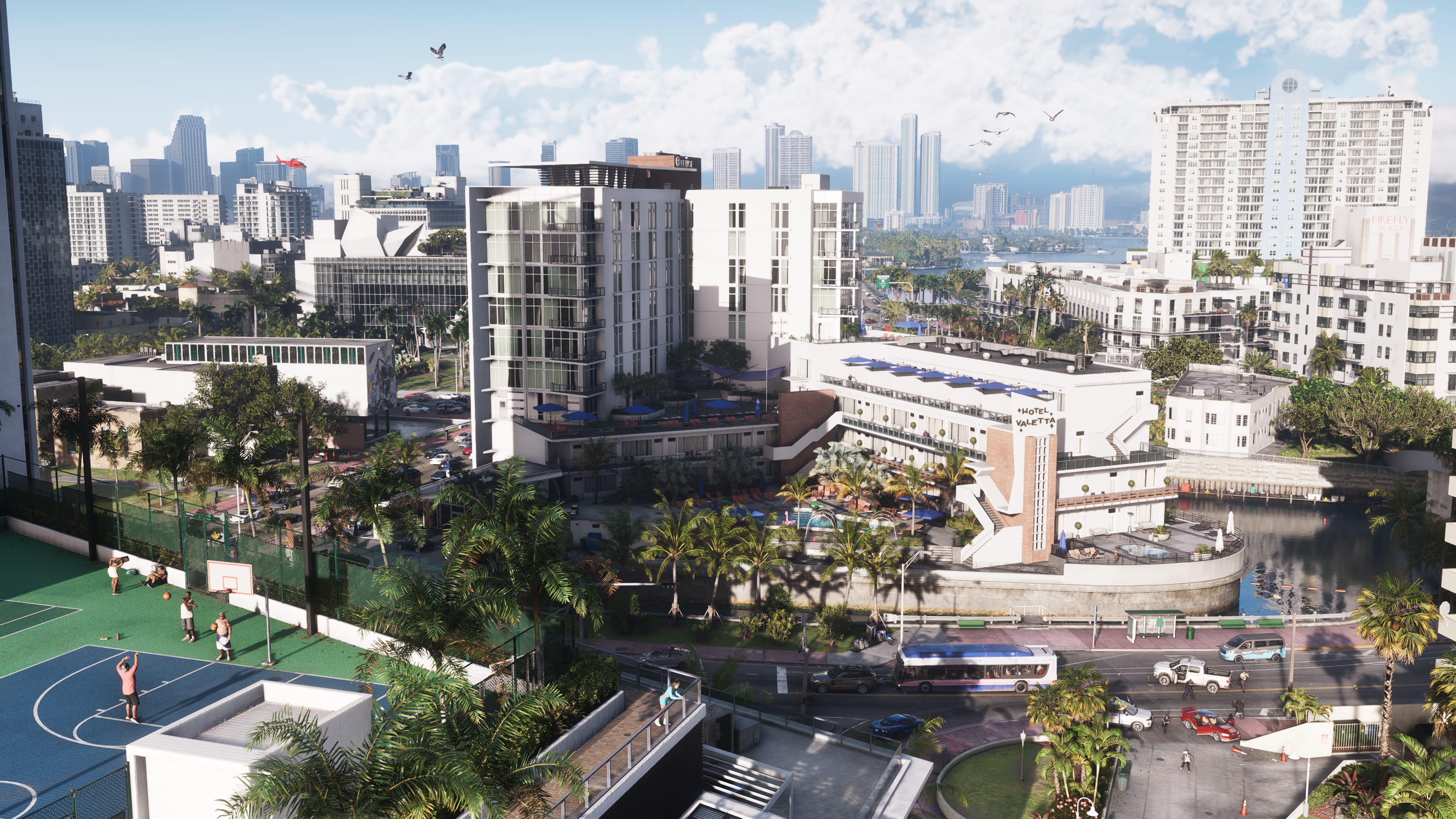
Quick Answer: There is no official GTA 6 soundtrack list. Rockstar has not published a station lineup or tracklist, and the only music it has formally attached to the game is what plays in the two trailers. Everything else — station names, artist rosters, “complete soundtrack” roundups — is third-party compilation, reported leaks, or guesswork. What is settled: GTA 6 launches November 19, 2026 on PS5 and Xbox Series X|S, pre-orders opened June 25, 2026, and the release date has been reaffirmed repeatedly since.
Why No One Can Hand You a “Full Confirmed Tracklist” Yet
Search for GTA 6’s soundtrack this week and you’ll find confident, list-shaped headlines promising songs, albums and stations. Almost none of them are drawing on Rockstar information. The studio has not published a station lineup, a tracklist, or a composer credits sheet for GTA 6, and historically it does not — the radio dial is revealed inside the game itself, or through official promotional material in the final stretch before launch.
That’s not a knock on outlets assembling these pages. It’s a structural fact about how Rockstar builds radio, and it’s worth understanding because it changes what you should trust.
GTA radio is a licensing product as much as an artistic one. Every track on a GTA station is a negotiated deal covering a term, a territory and a set of distribution rights — often split across recorded music and publishing. Those deals are struck years in advance for a project this size, but the public announcement is a marketing beat, not a legal necessity. When GTA V was approaching its 2013 launch, station details trickled out through the game’s own promotional channels and, eventually, the shipped game. The pattern has not changed.
Here’s the honest state of play right now.
| Claim | Status | Notes |
|---|---|---|
| Tom Petty — “Love Is a Long Road” | Confirmed placement | Used in the debut trailer (December 2023) |
| The Pointer Sisters — “Hot Together” | Confirmed placement | Used in the second trailer (May 2025) |
| A full station list | Not published | Rockstar has said nothing station-by-station |
| Specific station names circulating online | Unconfirmed | Aggregated from fan speculation and reported leaks |
| “200-song leaked tracklist” style posts | Unverified | Treat as fabricated unless Rockstar confirms |
Trailer Music Is Not Radio Music — and That Distinction Matters
This is the single most misunderstood thing in GTA soundtrack coverage.
Rockstar uses licensed music in trailers as a tone poem. GTA V’s debut trailer in 2011 was scored to the Small Faces’ “Ogdens’ Nut Gone Flake,” a 1968 British psych-pop track that had nothing to do with the in-game West Coast hip-hop spine of Radio Los Santos or West Coast Classics. It was there to say this is a sun-bleached, slightly decaying California story.
Red Dead Redemption 2 went the other direction entirely. Its marketing and its most memorable moment leaned on “Unshaken,” a track written specifically for the game with D’Angelo — original music used as narrative punctuation, not as a station preview.
So when Tom Petty’s “Love Is a Long Road” opened GTA 6’s first trailer and The Pointer Sisters’ “Hot Together” carried the second, the correct read is tonal, not literal. Both are pre-1990 tracks. Both signal warmth, motion and a slightly retro Americana. You can draw a mood from that. You cannot draw a station list from it. Sometimes a trailer song does turn up on the in-game dial, but there is no reliable rule, and anyone claiming otherwise is inferring.
Why Radio Carries More Weight in GTA 6 Than in Any Rockstar Game Since Vice City
The setting does a lot of the work here. GTA 6 returns to Vice City and the state of Leonida, a fictional Florida built on Miami’s real musical geography — Cuban and Caribbean diaspora scenes, Miami bass, Latin trap and reggaeton, Southern hip-hop bleeding down from Atlanta, and a festival-driven electronic culture that reliably fills the city every spring.
That’s an unusually rich palette, and it’s the first time Rockstar has built a modern-day dial around a Latin-American-influenced East Coast city. San Andreas gave us three cities and three eras of West Coast sound. GTA IV gave us the most eclectic dial in the series — a Liberty City that ran from Vladivostok FM to The Journey to Electro-Choc. GTA V gave us a Los Angeles that was genre-partitioned almost sociologically: West Coast Classics for the old heads, Radio Los Santos for the current scene, Non-Stop-Pop for the 80s nostalgia lane, Rebel Radio for the desert.
Leonida should follow that logic. My own read on the setting — not a leak, just an inference from Rockstar’s track record — is a dial that splits roughly into contemporary and legacy lanes, with more weight than usual on the contemporary side because the game is set in the present day, not 1986.
| Likely lane | Why it fits Leonida | Basis |
|---|---|---|
| Contemporary Latin urban (reggaeton, Latin trap) | Dominant youth sound in real-world Miami; mirrors GTA V’s Radio Los Santos slot | Analysis |
| Miami bass / Southern rap | Regional heritage and GTA’s long hip-hop lineage | Analysis |
| EDM / house / festival | Miami’s festival circuit; Rockstar already runs a dance-music label | Analysis |
| 80s pop and synthwave | Vice City brand equity — cheap nostalgia, high payoff | Analysis |
| Classic rock | Every GTA game since 2001 has one | Analysis |
| Talk radio and satire | Rockstar signature going back to Chatterbox and WCTR | Analysis |
| Country / Southern rock | Leonida’s inland counties, echoing GTA V’s Rebel Radio | Analysis |
A Short History of Rockstar’s Radio, in Five Moves
The reason this topic deserves more than a listicle is that Rockstar’s relationship with music has changed shape three times in twenty-five years, and GTA 6 sits at the end of that arc.
2001–2004: The original-commission era. GTA III had roughly nine stations, and much of the music was produced in-house or commissioned — Head Radio, Lips 106, the MSX drum-and-bass block. It was cheap, it was legally clean, and it worked.
2002: Vice City rewrites the rules. Vice City’s nine stations were almost entirely licensed 80s material — Flash FM, Wave 103, V-Rock, Fever 105, Emotion 98.3, Wildstyle. Michael Jackson, Blondie, Flock of Seagulls. Rockstar never disclosed what that cost, and any specific figure you see quoted online should be treated as unverified. But the strategic point stands: Vice City proved licensed music could be a selling point rather than background texture, and the industry noticed.
2004–2008: Scale and range. San Andreas mapped its stations onto three cities and three eras. GTA IV pushed breadth further with a dial that sprawled across jazz, dub, Russian pop, electro and talk. It was the most curatorially ambitious radio lineup Rockstar has ever shipped — and it’s also the one that aged worst legally. A 2018 patch quietly removed a batch of licensed tracks from GTA IV after rights lapsed, a reminder that licensed radio is rented, not owned.
2013: GTA V builds a decade-long platform. Around fifteen stations at launch, later expanded well past twenty through GTA Online. The Lab brought Dr. Dre into the fold in 2015. Blonded Los Santos 97.8 FM arrived with Frank Ocean in 2019. The Cayo Perico Heist added KULT FM and Still Slipping Los Santos in 2020. MOTOMAMI Los Santos, fronted by Rosalía and Arca, landed with The Contract in 2021 alongside a heavy Dr. Dre presence.
2021: Rockstar becomes a record label. The CircoLoco Records partnership is the detail most soundtrack coverage ignores, and it’s arguably the most important one for GTA 6. Rockstar didn’t just license dance music for GTA Online’s Music Locker — it went into business with the label ecosystem, releasing records and tying them into the game world. That is a rights strategy disguised as a nightclub.
The Economics That Will Shape GTA 6’s Dial
Put those two facts together — a 2018 patch pulling tracks from GTA IV, and a studio that now co-owns a record label — and you can see the design pressure Rockstar is under.
A licensed station is a recurring liability. It has a term. It has territories where the deal may not cover digital distribution. It has publishing splits. And GTA 6 is not a five-year game. GTA Online 2 is confirmed, which means the music infrastructure shipped on November 19, 2026 is expected to survive a decade or more of live-service updates — exactly the lifespan that forced GTA Online to keep re-upping and replacing its own catalog.
The rational response, and one Rockstar has already started executing, is to reduce exposure to third-party rights over time. That means more original commissions (the RDR2 model), more artist partnerships where the artist’s label is also a partner (the CircoLoco model), and more stations built around hosted shows where the DJ relationship itself is the asset.
There’s a counterweight, though, and it’s why artists still line up to be on a GTA station. A placement in a Rockstar game reliably moves catalog numbers years or decades after release — the phenomenon the industry half-jokingly calls the GTA bump, and one that reportedly sent Gerry Rafferty’s “Baker Street” back up the streaming charts long after its 1978 release. For a legacy act, a GTA slot is free, permanent marketing. For a current artist, it’s a cultural credential. That gives Rockstar unusual leverage at the negotiating table, which in turn explains why the leaked “$X million per song” figures that circulate on forums never hold up under scrutiny.
How the Radio Actually Gets Confirmed
If you want to be first to a verified list rather than first to a rumor, here’s the sequence to watch between now and launch.
- Rockstar Newswire. Official station reveals, if they happen pre-launch, will appear there and nowhere else first. Nothing on a fan wiki or an aggregator page is official until it traces back to Newswire or the game itself.
- The shipped station wheel. On day one, the pause menu lists every station. That is the real tracklist. Within hours, community wikis will have it transcribed, and that transcription is far more reliable than anything published before launch.
- In-game DJ credits. Rockstar always credits its hosts — GTA V’s Kenny Loggins, Cara Delevingne, Flying Lotus, Bootsy Collins and Lee “Scratch” Perry were all public names. A GTA 6 host roster is a strong signal of what each station plays.
- Streaming-side verification. Once the game is live, the fastest confirmation method is playing it and letting a recognition app identify tracks — the same workflow the community used for GTA V’s Self Radio era and every GTA Online station addition since.
What you should not do is datamine the game ahead of release. Rockstar has a long history of pursuing leaks aggressively, and a pre-release rip of the audio files is the kind of thing that ends in a takedown rather than a scoop.
If you’re budgeting for launch, the commercial details are already public — the price guide and pre-order guide cover the $79.99 Standard and $99.99 Ultimate editions, and the release date hub tracks the confirmed November 19, 2026 window.
Rumors & Unconfirmed Theories
Soundtrack speculation is the single rumor-richest corner of GTA 6 discourse, which makes it the one worth being most careful about.
- “Confirmed” station names circulating online. Several station names have been repeated so widely that they read as fact. They are not. Rockstar has published no station list, and anything attributed to a leak should be labeled as such until the game ships.
- A dedicated 80s Vice City nostalgia station. This is community speculation built on brand logic rather than evidence. It’s plausible — Vice City’s identity is inseparable from its 80s playlist, and a legacy station is cheap goodwill. But GTA 6 is set in the present day, and Rockstar has never built a modern-day dial that leaned primarily on period music.
- Major artists hosting in-game radio shows. Given how GTA Online used Blonded Los Santos 97.8 FM, MOTOMAMI Los Santos and the Music Locker residencies, an artist-hosted station in GTA 6 is a reasonable expectation rather than a wild theory. That said, no specific artist has been confirmed by Rockstar.
- Large “leaked” tracklists. Any list running to hundreds of tracks should be assumed fabricated until verified. Real station lists get built by the community after launch, not before.
Note: All items in this section are unconfirmed rumors, community speculation or third-party reports. None have been verified by Rockstar Games or Take-Two Interactive. Treat them as discussion points, not facts.
What to Watch Before November 19
The most useful way to think about GTA 6’s soundtrack right now is as a system you can predict the shape of but not the contents of. Based on how much the Leonida setting overlaps with real Miami’s music scenes, and how Rockstar has run its last three dials, expect a broad, genre-partitioned lineup with a contemporary core, a nostalgia lane, a talk station, and at least one hosted dance or hip-hop show — then expect it to grow after launch, the way GTA Online’s did for the better part of a decade.
Everything specific — the songs, the hosts, the station names — arrives when the game does. That’s less satisfying than a leaked list, but it’s the only version of this story that’s actually true.