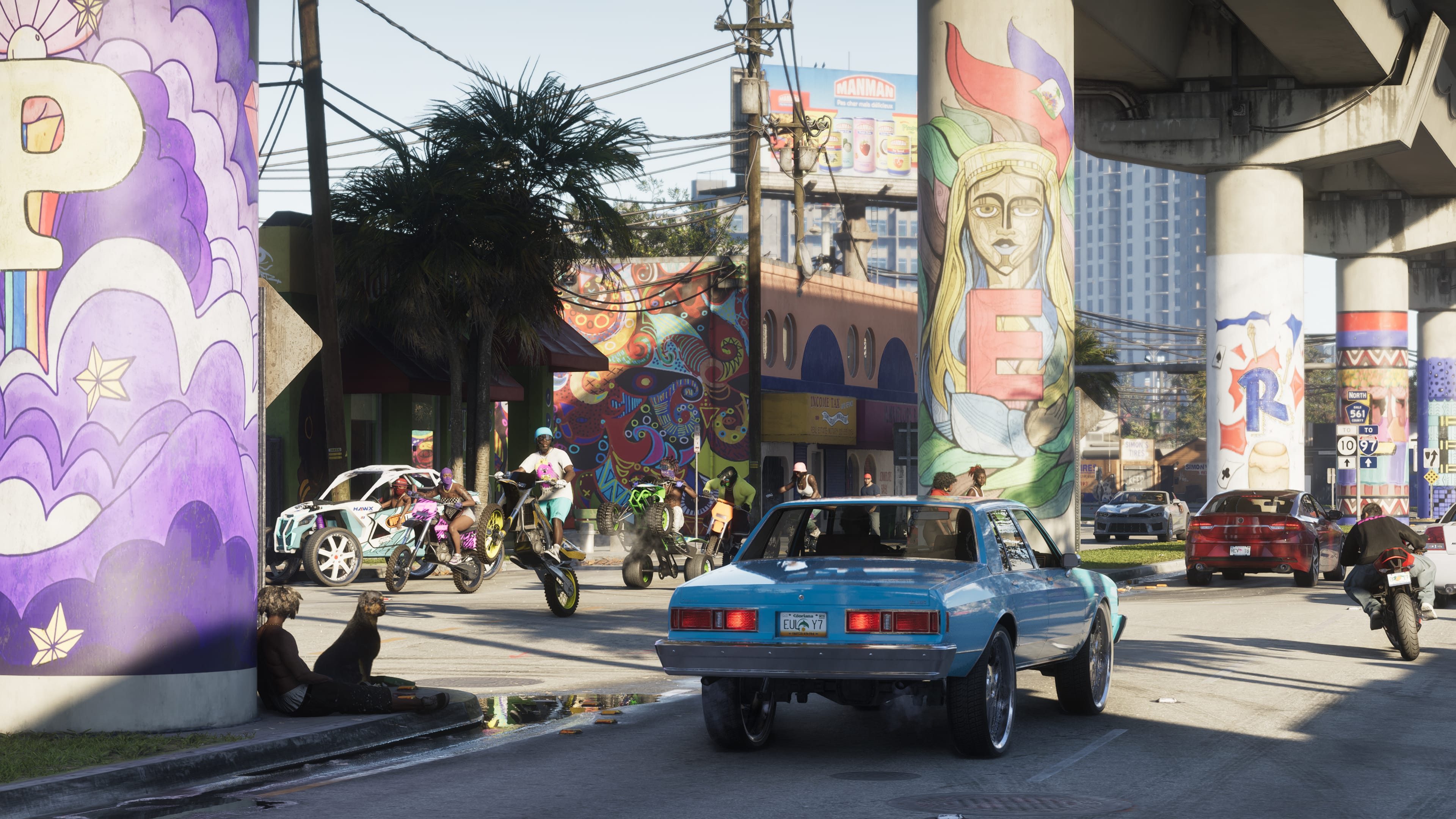
Quick Answer: A recent Wall Street Journal piece warns managers to brace for a “work blackout” around the November 19, 2026 launch of GTA 6, as employees book time off and lose focus during the biggest entertainment release of the year. The article underscores how Rockstar’s game has become a cultural event on the scale of a major holiday rather than just a video game. GTA 6 remains on track for its confirmed release on PS5 and Xbox Series X|S, with pre-orders already open since June 25, 2026.
When the Wall Street Journal starts analyzing your video game’s impact on corporate productivity, you know you’ve moved beyond being just a product. That’s exactly what’s happening with GTA 6. The storied business publication has reportedly framed the approaching launch as a “work blackout” — a phrase that’s now circulating through office chat groups, HR departments, and middle-manager Zoom calls everywhere.
The basic premise isn’t complicated. Rockstar Games’ next entry in the Grand Theft Auto franchise is scheduled to land on November 19, 2026, and enormous numbers of adults are going to want to disappear for a few days to play it. What makes this phenomenon worth examining isn’t just the game’s size — it’s that this time, the anticipation is quantifiably different. Pre-orders opened June 25, 2026, the game is priced at $79.99 for the Standard Edition and $99.99 for the Ultimate Edition, and the marketing machine has been running at full tilt for months. This isn’t a niche enthusiast event. It’s a mainstream cultural moment with a fixed date.
What “Work Blackout” Actually Means
The Wall Street Journal’s framing is useful because it puts a name to something players have known for a long time. A “work blackout” in this context means a simultaneous, expected drop in workplace output driven by employees who are either physically absent or mentally checked out. The WSJ piece reportedly notes that some managers are already planning around the launch — approving vacation requests, rescheduling big meetings, and mentally preparing for a dead week.
It’s tempting to treat this as hyperbole. But the evidence suggests the WSJ is on solid ground. When GTA V launched in September 2013, the buzz was already enormous, yet the workplace conversation around it was less organized. Social media was younger, remote work barely existed, and “playing video games on a workday” still felt slightly taboo. By 2026, remote and hybrid work arrangements have normalized the idea that your colleague in a Slack thread might also be exploring Vice City’s ocean drive on a Tuesday afternoon.
There’s also the sheer weight of the release itself. GTA 6 is arriving on PlayStation 5 and Xbox Series X|S with a map reported to be around 2.5 times larger than GTA 5’s Los Santos and Blaine County. It features dual protagonists — Lucia Caminos and Jason Duval — a new take on the classic Bonnie and Clyde dynamic, and a graphical engine (RAGE 9) that pushes the current console generation to its limit. This isn’t a game you can casually dip into. The opening hours alone will pull players into a dense, sprawling world that demands attention.
Historical Precedent: Launch Day Was Always a Holiday
The Wall Street Journal’s warning is new, but the underlying pattern is old. Rockstar has effectively been training the public to treat its launches as events for more than two decades.
Let’s walk through the timeline. Grand Theft Auto III (October 2001) invented the modern 3D open-world template and instantly became a cultural lightning rod. San Andreas (October 2004) expanded the map, added RPG mechanics, and pushed the scale so hard it became a controversy magnet. Then came GTA V in September 2013, which certified the franchise’s status as a true mainstream entertainment juggernaut — Take-Two reported over $1 billion in sales in its first three days, and the game’s online mode, GTA Online, went on to become a permanent cultural fixture.
Red Dead Redemption 2 (October 2018) was the same phenomenon with a cowboy hat. It delivered one of the biggest opening weekends in entertainment history at the time, reportedly grossing around $725 million in its first three days. People took days off for that game too, but it was treated as a niche of the mainstream. GTA is different. GTA is the Super Bowl of video games, and the entire working world seems to know it.
| Release | Game | Cultural Milestone |
|---|---|---|
| Oct 2001 | GTA III | Defined the 3D open-world genre; triggered congressional hearings |
| Oct 2004 | GTA: San Andreas | Massive map, RPG systems, “Hot Coffee” controversy |
| Sep 2013 | GTA V | $1B in 3 days; GTA Online begins; worldwide launch culture |
| Oct 2018 | Red Dead Redemption 2 | ~$725M opening weekend; cinematic open-world peak |
| Nov 19, 2026 | GTA 6 | Pre-orders open Jun 25, 2026; $79.99 / $99.99 pricing; “work blackout” era |
The pattern here is escalation. Each Rockstar launch has been bigger than the last, and GTA 6 is expected to follow the same trajectory. The difference is that this launch is also happening against a backdrop of global hype sustained by an Eternal feedback loop: every trailer frame analyzed, every low-resolution leak dissected, every rumored map expanded into a YouTube essay.
Why GTA 6 Will Produce a Bigger Blackout Than GTA 5
There are several structural reasons the GTA 6 launch will likely hit the workplace harder than any previous Rockstar release.
A longer release gap. GTA V came out 11 years before GTA 6’s November 2026 date. That’s the single longest gap in the series’ history. Fans have been waiting through an entire console generation and part of another. That pent-up demand has a distinctive quality: it’s not just enthusiasm, it’s patience reaching a breaking point. People who were in high school when GTA V launched are now full-time professionals with credit cards and vacation days. Guess what they’re spending both on?
Pre-orders are already massive. Rockstar and Take-Two opened pre-orders on June 25, 2026, and the price points — $79.99 Standard, $99.99 Ultimate — haven’t deterred the audience. If third-party retail chatter and reseller listings are any indication, demand is enormous. When people have already paid $80 to $100, the psychological commitment to play on day one is stronger than ever.
The online component guarantees longevity. GTA Online has been around since 2013, effectively sustaining the franchise for over a decade with monthly updates. GTA Online 2, expected to arrive with GTA 6, won’t be a one-weekend affair. Employees aren’t just booking off the Friday after launch — they’re thinking about the first weekend, the following weekend, and the grind toward early progress. That “blackout” isn’t a single event; it’s the beginning of a persistent competing interest with work.
The world is bigger and more detailed. Rockstar’s RAGE 9 engine, along with a map 2.5 times larger than GTA 5’s, means GTA 6 is designed to be lived in, not speed-run. Early impressions point toward deeper interiors, more interactive systems, and a city that feels alive in a way that wasn’t technically possible in 2013. According to a recent BBC extended look following a Netflix preview, the game’s scope is being described in ways that sound closer to a simulated state than a standard game map.
The Economics of Distraction
Why does the Wall Street Journal care? Because the economics are actually measurable. When GTA V launched, multiple analysts attempted to estimate the productivity cost of millions of employees skipping work or working half-heartedly. Those estimates ranged wildly from hundreds of millions to billions of dollars in lost output. The exact number was never precise, but the direction was clear.
GTA 6 is a larger game, releasing in an era where gaming is more socially accepted than ever before. It also comes at a moment when many employers are already dealing with engagement struggles in hybrid work environments. A game that demands sustained attention for hours at a time is, from a manager’s perspective, the worst possible distraction at the worst possible season — right before the end-of-year push.
There’s also a generational pattern worth admitting honestly: many of the people calling in “sick” on November 19 or 20, 2026, won’t be sick at all. They’ll be in Vice City. This isn’t a phenomenon unique to gaming — people do the same for the Super Bowl, the World Cup final, or a major movie opening. What’s different is the duration. A sports final takes a few hours. GTA 6’s first playthrough can stretch for 30 to 40 hours or more, and that’s before you touch the online mode.
What This Means for Players
For players, the WSJ coverage is essentially confirmation that GTA 6 has already achieved something rare: it is a topic of conversation in the financial press months before release. That kind of attention reflects the game’s gravity, but it also puts pressure on Rockstar to deliver a product that justifies the hype.
The “work blackout” narrative can also be genuinely useful. It gives people a socially acceptable reason to plan ahead. If the Wall Street Journal says this is a real phenomenon, then taking a day off to play GTA 6 becomes less of an awkward confession and more of a predictable event, like booking a flight for Thanksgiving. In a strange way, the article normalizes the very behavior it warns managers about.
For the lore-obsessed, this kind of coverage also highlights just how far the franchise has come. A game that began as a top-down 2D curiosity in the late 1990s is now being discussed as a potential global economic event. Rockstar’s approach — long development cycles, obsessive detail, occasional leaks, and deliberate silence — has proven time and again that scarcity fuels desire. GTA 6’s November 19, 2026 date has been locked for months, pre-orders are open, and the entire industry is counting down to what could be the most successful entertainment launch in history. If that means a few empty office desks for a week, the Wall Street Journal has already warned us.
Final Thoughts
The work blackout isn’t just a funny headline. It’s a sign of how integrated video games have become with everyday adult life. Two decades ago, taking a day off for a game launch was a niche behavior. In 2026, the Wall Street Journal is devoting coverage to it. That’s not a story about absenteeism — it’s a story about cultural dominance.
Rockstar has built something that exists simultaneously as a crime sandbox, a technical showcase, an economic engine, and a worldwide touchpoint. When GTA 6 finally arrives on November 19, 2026, it won’t just be a game. It will be a date that appears on family calendars, team calendars, and likely a few fake doctor’s notes. Managers are right to be wary. The rest of us should probably decide now whether we’re taking the 19th and 20th off — or holding out for the online mode’s inevitable launch chaos.
Note: This article is based on reporting from the Wall Street Journal and related coverage from the BBC. Character details, the confirmed release date, and pricing are official and previously announced. The “work blackout” description is the publication’s framing, not a confirmed end-of-show economic measurement.
More GTA 6 Coverage
- GTA 6 Release Date Guide
- GTA 6 Pre-Order Guide
- GTA 6 Editions: Standard vs Ultimate
- GTA 6 vs GTA 5: Systems Compared
For deeper dives into the game’s fictional setting, protagonists, and online future, visit the Vice City database entry, the dual protagonist system, and GTA Online 2. And if you’re planning your own personal work blackout, our GTA 6 release countdown will tell you exactly how much time remains.