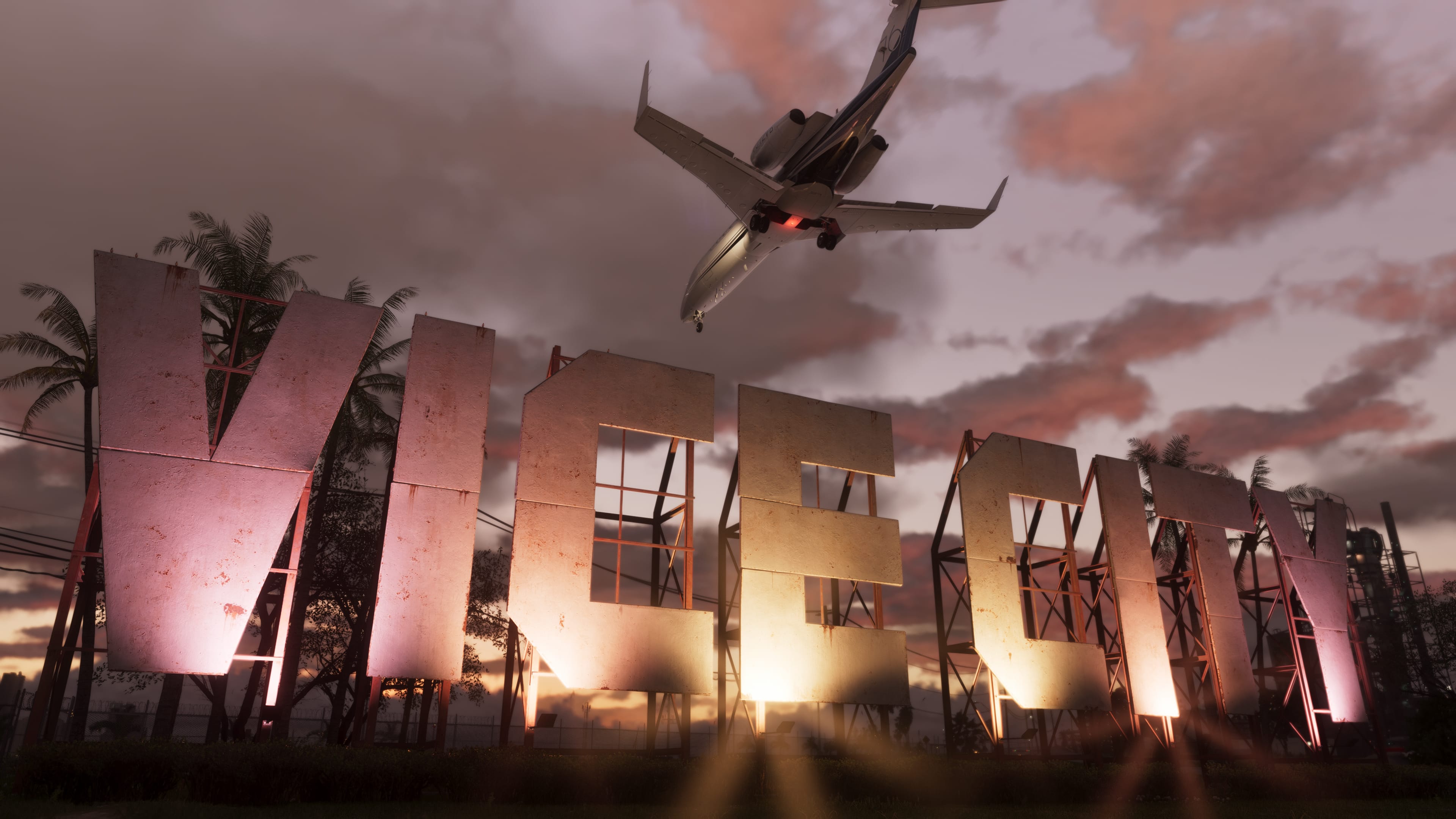
Quick Answer: Rockstar Games has fundamentally shifted the role of audio in Grand Theft Auto VI, moving beyond traditional radio curation to integrate music as an active narrative device. Reports indicate that the soundtrack reacts to gameplay and story progression, effectively making the audio a “main character” in the experience, a significant evolution from the static playlists of GTA V.
The relationship between Grand Theft Auto and music is deeply woven into the fabric of the franchise. From the hip-hop dominance of San Andreas to the eclectic, time-period-specific playlists of GTA V, audio has always been a pillar of immersion. However, recent reporting suggests that GTA 6 takes this concept to a new level. According to a detailed feature by Billboard, the development team at Rockstar has treated the soundtrack not as background filler, but as a core pillar of the game’s design, on par with the graphics engine or the open-world mechanics. This shift signals a maturation in how Rockstar approaches interactive media, acknowledging that sound is a primary driver of emotional connection and narrative pacing.
From Static Playlists to Dynamic Audio
In previous installments, the radio in the GTA series functioned largely as a static layer. Players would tune into Los Santos Radio or Non-Stop-Pop FM in GTA V, and the stations would loop curated playlists. While the curation was impeccable—often serving as a historical archive for its time period—the interaction was passive. The music did not acknowledge the player’s state, their location in the story, or the specific actions being taken. It was ambient texture.
GTA 6 reportedly breaks this mold. The term “main character” used by critics and developers alike refers to the integration of dynamic audio systems that likely leverage the advanced capabilities of the RAGE 9 engine (more on that in our analysis of the engine). This implies that the music may shift dynamically based on:
- Narrative Beats: As the protagonists, Lucia Caminos and Jason Duval, engage in high-tension heists or emotional story arcs, the soundtrack likely intensifies or shifts in genre to mirror the emotional tone.
- Player Agency: The audio might change when the player enters a high-wanted state, transitions between locations (from the quiet suburbs of Leonida to the vibrant streets of Vice City), or interacts with specific NPCs.
- Environmental Storytelling: Music could be used to tell the backstories of side characters without dialogue, a technique that would be novel for an open-world title.
This is not mere speculation based on thin evidence; the emphasis placed on this feature in official communications and industry coverage suggests it was a top-priority design goal for Rockstar North, similar to how Red Dead Redemption 2 prioritized animal behavior simulation. By making the audio responsive, the game becomes more immersive, creating a feedback loop where the player’s actions shape the world’s soundscape, rather than just listening to a pre-recorded track.
Historical Context: The Evolution of Rockstar Audio
To understand why this is a major leap, we must look at the franchise’s history.
- Grand Theft Auto: San Andreas (2004): This title is often cited as the gold standard for radio integration. The music wasn’t just “present”; it was central to the identity of the game. Tracks by Snoop Dogg and Tupac were not merely licensed; they were deeply tied to the character of CJ and the culture of the era. However, the system was still static. You chose a station, and it played.
- Grand Theft Auto IV (2008): The audio became more realistic, with in-game characters discussing music and the radio having more complex frequency jingles. It was a step toward realism but still lacked dynamic reactivity to gameplay.
- Grand Theft Auto V (2013): The audio design here was sophisticated in curation, utilizing period-appropriate music to anchor the 2013 setting in its cultural context. The “radio” was a character in itself, with DJs speaking over tracks. Yet, the underlying system remained linear. A chase sequence didn’t change the station; it just played whatever song was up next.
GTA 6 is the first entry to reportedly move from “curation” to “composition” in real-time. This aligns with trends in modern game design where audio is treated as a systemic element, similar to how The Last of Us Part II uses audio to direct player attention or Horizon uses dynamic soundtracks that layer instruments based on combat intensity. By adopting this, Rockstar is asserting that the feel of the game is as important as its look.
The Vice City Connection
The setting of GTA 6 is heavily inspired by Miami, the same city that inspired Vice City (1986) and its 2013 reboot. Music is inextricably linked to that region’s identity. For decades, the sound of Miami has been defined by Tropical House, Hip-Hop, and Latin Pop. In GTA V, the music was a nod to the present day. In GTA 6, the music is likely a vibrant, dynamic pulse that represents the current cultural zeitgeist of the American South and East Coast.
This thematic choice reinforces the “main character” idea. If the setting is Vice City, and the audio reflects the heartbeat of that city, the music isn’t just accompaniment; it is the soul of the location. When players drive through the neon-lit streets of Leonida, the audio will likely not just play songs, but evoke the atmosphere of the place in a way that is responsive to their journey. This creates a layer of environmental storytelling that was previously impossible in the franchise. For more on how the map and setting function, see our Vice City location database.
Technical Implications: The RAGE 9 Engine
The ability to implement such dynamic audio relies heavily on the underlying technology. Rockstar has been developing the RAGE 9 (Rage Advanced Game Engine) for years. While specific technical documents are sparse, the scale of GTA 6 suggests that the audio subsystem has been decoupled from the linear audio files used in previous titles.
We can infer several technical shifts:
- Middleware Integration: Likely use of advanced audio middleware (such as Wwise or FMOD) that supports complex logic trees for audio switching.
- Streaming Capabilities: The game must stream audio assets dynamically to maintain low latency, a challenge on both PS5 and Xbox Series X|S given the large data footprint of high-quality audio.
- Procedural Elements: There may be procedural generation of sound layers. For example, the rain on the windshield might be mixed with the bass of a hip-hop track to create a unique audio signature for rainy nights in Vice City.
Our explainer on the RAGE 9 engine details how the engine handles visual fidelity, but the audio component is equally critical to the “sixth generation” feel of the game. This isn’t just about louder bass; it’s about the precision of spatial audio, which is a key selling point for the next-gen consoles.
Impact on Player Experience
Why does this matter to the average player? Immersion.
In GTA 5, players often complained about the radio being too repetitive or not matching the vibe of a specific mission. In GTA 6, the promise is that the music will always match the vibe. If you are planning a heist, the tension of the audio should build. If you are on a romantic drive with your partner, the audio should shift to something more melodic and relaxing. This removes the dissonance that players often felt when the “fun” gameplay was accompanied by the “wrong” music.
It also has implications for the modding community and future expansions. If the audio is dynamic, the architecture for GTA Online 2 (which is confirmed to be part of the launch title) will likely be different. Online players will need a shared audio state, or the game will need to handle asynchronous audio events gracefully. This is a significant technical hurdle that Rockstar has reportedly overcome, signaling that the online mode will have a cohesive audio identity distinct from the single-player campaign.
Industry Comparisons
While few games have pulled off “music as a main character” with the success of GTA 6, we can look to other titles for context:
- Jazzmaxx (2011): Often cited as a failed experiment, Jazzmaxx allowed players to buy and play songs from a music library within a city simulator. It failed commercially but proved the market interest in music-driven games.
- Dancecentral / Just Dance: These titles use music as the core mechanic. GTA 6 is different because the music is environmental, not mechanical.
- Persona 5: The Persona series is a masterclass in using music to define character and scene transitions. The “Jazz” theme is so iconic it is inseparable from the brand. Rockstar is aiming for a similar cultural imprint, where the sound of GTA 6 becomes as recognizable as the sound of Persona 5.
The key difference is scale. Persona 5 is a contained RPG. GTA 6 is an open-world behemoth. Achieving that level of musical cohesion across hundreds of hours of gameplay is a monumental task.
Data: Evolving Audio Features in GTA
To visualize the progression, here is a breakdown of audio features across the major entries:
| Title | Year | Audio System | Key Feature | Reactive to Gameplay? |
|---|---|---|---|---|
| GTA: San Andreas | 2004 | Static Radio | Cultural Curation | No |
| GTA IV | 2008 | Enhanced Radio | DJ Dialogue | No |
| GTA V | 2013 | Period-Static | Cultural Anchoring | No |
| GTA 6 | 2026 | Dynamic Audio | Narrative Integration | Yes (Reported) |
This table highlights the stark contrast. For two decades, the audio in GTA has been a “set and forget” system. GTA 6 is the first to reportedly introduce true reactivity. This is not just a technical upgrade; it is a design philosophy shift.
Rumors & Unconfirmed Theories
As with all pre-launch details for a Rockstar title, much of the information is derived from leaks and industry speculation. While the “main character” status of the music is supported by industry reporting, specific implementations remain unconfirmed.
- Dynamic Lyrics: There is community speculation that certain in-game radio DJs might read lyrics from songs or interact with the music in real-time. This is unconfirmed.
- Soundtrack Customization: Rumors suggest players might be able to upload their own music to in-game radios. While this has never been a feature in GTA, it is a frequent request. No official confirmation exists.
- Genre-Specific Locations: It is alleged that specific districts of Leonida will have genre-specific audio. For example, the industrial docks might play industrial metal, while the beaches play reggaeton. This aligns with the “environmental storytelling” theory but is not officially confirmed.
Note: These theories are based on community speculation and secondary reporting. Rockstar has not released a detailed technical breakdown of the audio subsystem. Until the game is released on November 19, 2026, these details may change or remain unverified.
Why This Matters for the Franchise
The elevation of audio to a “main character” is a signal that Rockstar is entering a new phase of development. It is no longer just about bigger maps and more detailed graphics. It is about deeper sensory integration. This has implications for future titles, including any potential spin-offs or GTA 7.
If GTA 6 succeeds in making the music indispensable to the experience, it will set a new benchmark for open-world audio. Competitors like Cyberpunk 2077 or The Witcher 3 have strong soundtracks, but neither has the cultural weight of GTA. If GTA 6 nails this integration, it could define the sound of the decade, just as GTA V defined the visual language of open-world games.
For players, this means a more emotional, engaging, and immersive experience. The game will speak to you not just through visuals and dialogue, but through the very pulse of the city. It is a bold move, and given Rockstar’s track record of innovation, it is likely to be executed with precision.